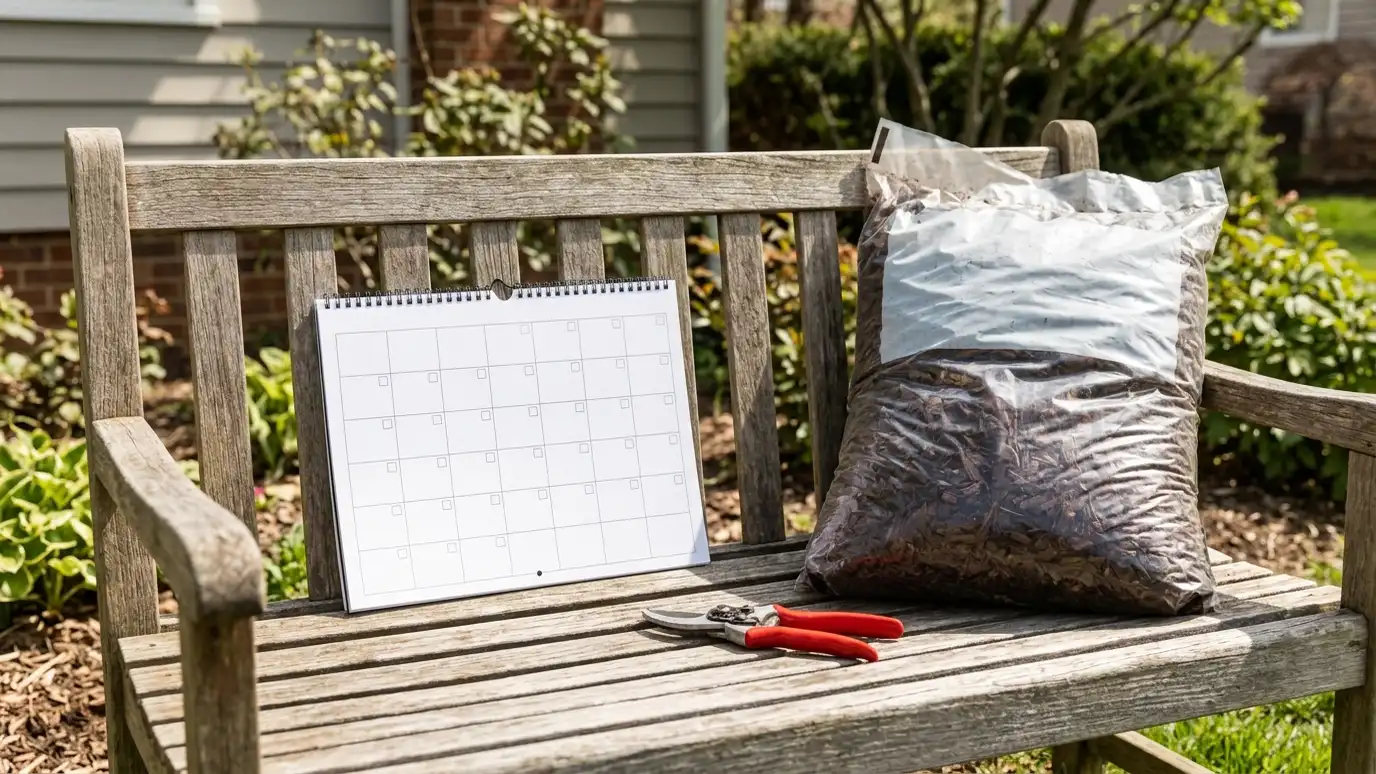
Late winter
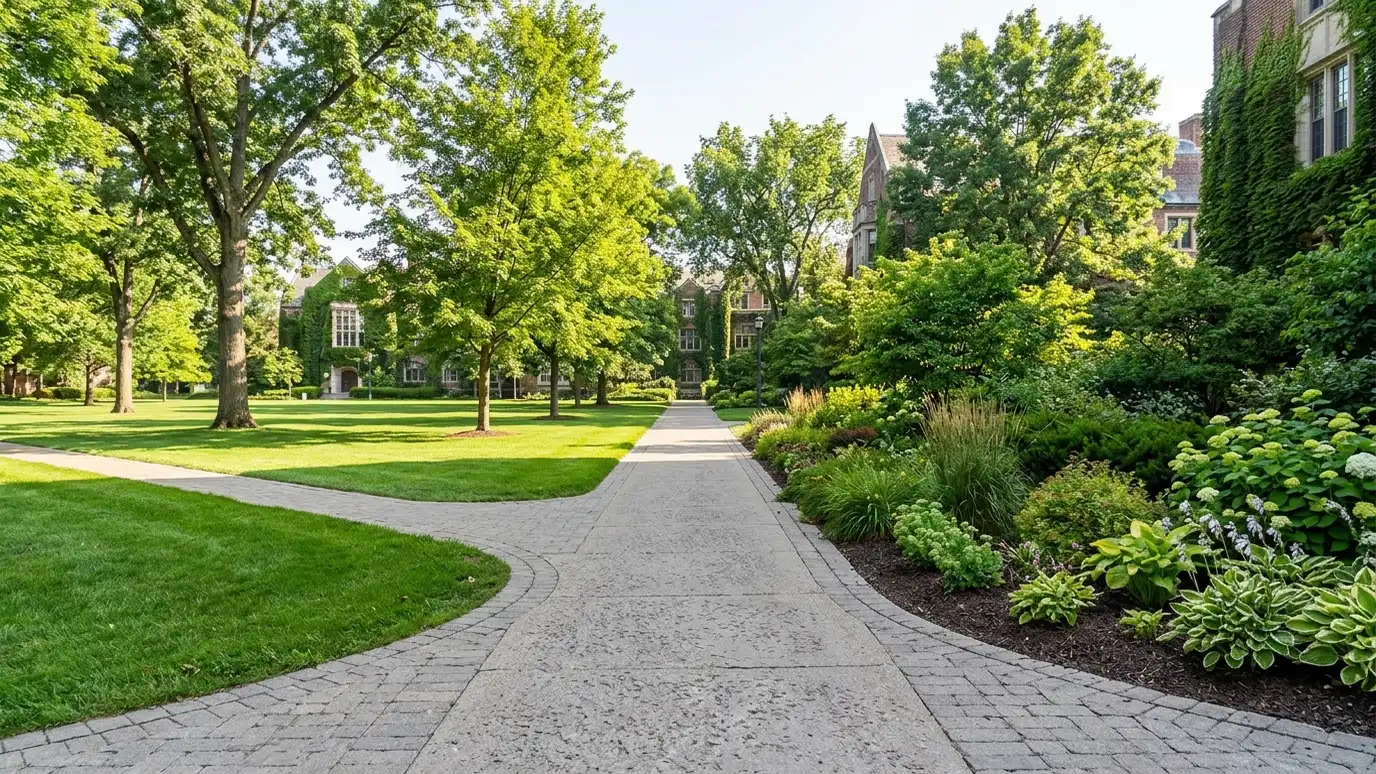
Late winter is the time for pruning dormant trees and many shrubs, planning projects and applying pre-emergent weed control before crabgrass germinates. Cut back ornamental grasses and perennials before new growth begins.
Order mulch and plan seasonal color so installs happen on time.
Spring
Spring brings cleanups, irrigation startup, first mowing, mulch refresh and spring color. Fertilize cool-season turf lightly and treat broadleaf weeds as they appear. Inspect trees for storm damage and winter injury.
This is also the time to review contracts and schedule seasonal services.
Early summer
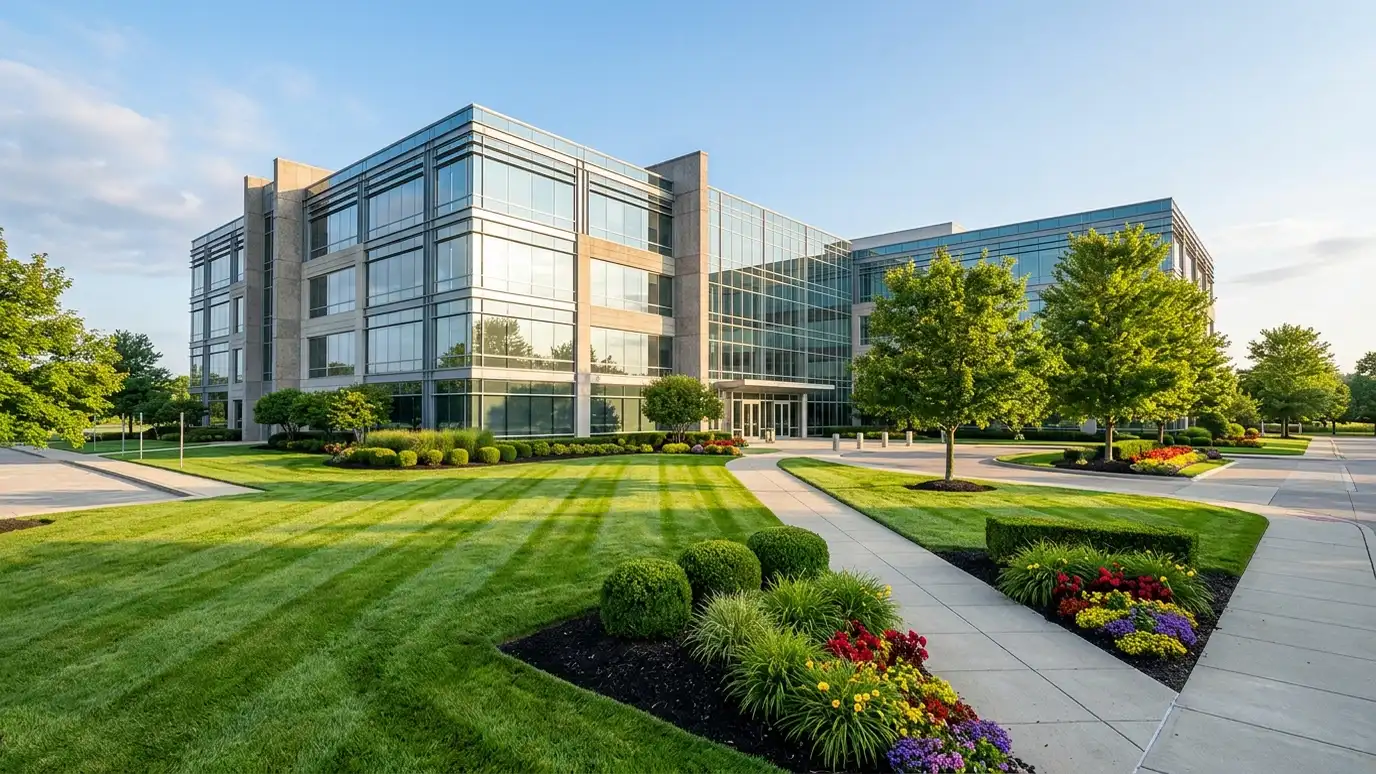
Mowing frequency peaks and fescue begins to show heat stress. Raise mowing heights, adjust irrigation and watch for disease in warm, humid weather. Plant heat-tolerant seasonal color.
Check ponds and basins for algae and bank erosion after spring rain.
Late summer
Heat and drought stress turf and plants. Keep irrigation efficient and repair leaks and dead zones. Plan fall aeration and overseeding, and order seed or sod in advance.
Treat grubs where needed and watch for fall webworms and other pests.
Fall
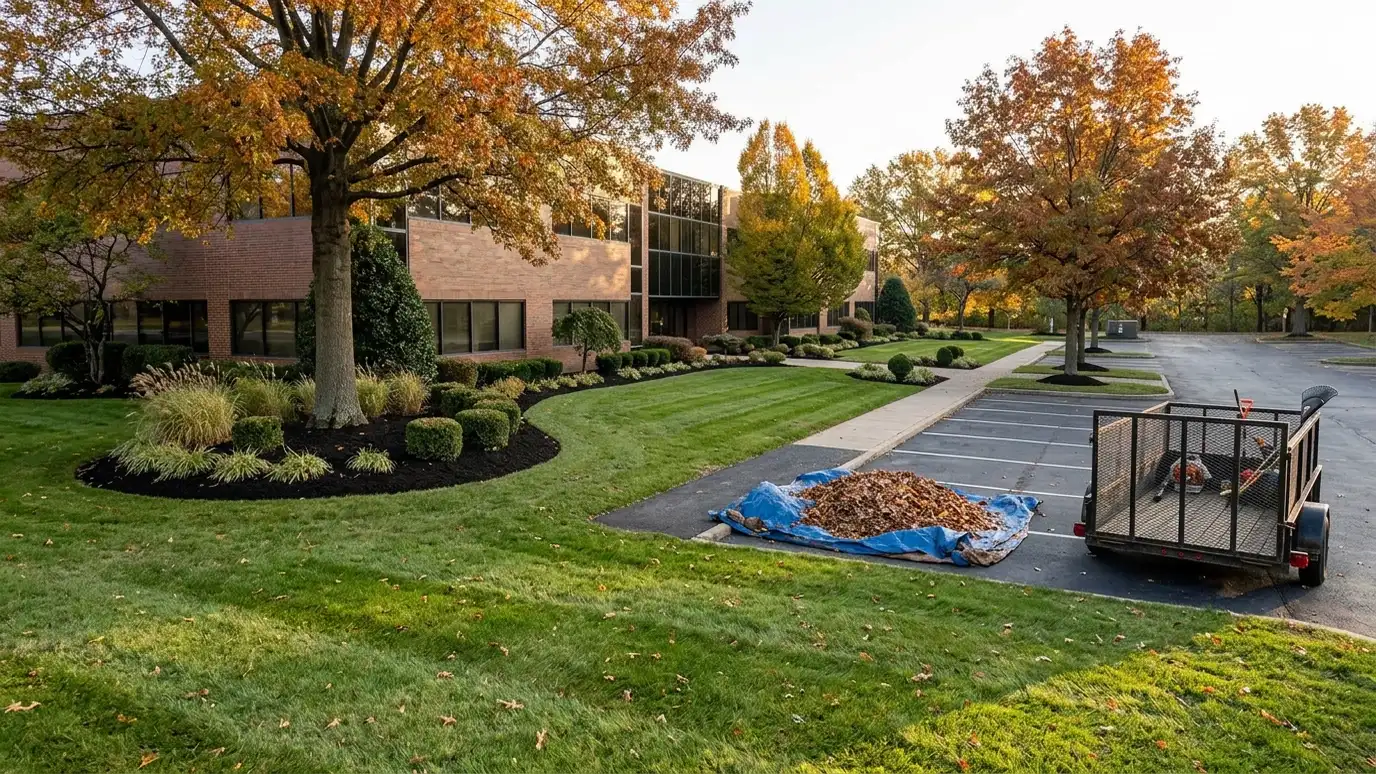
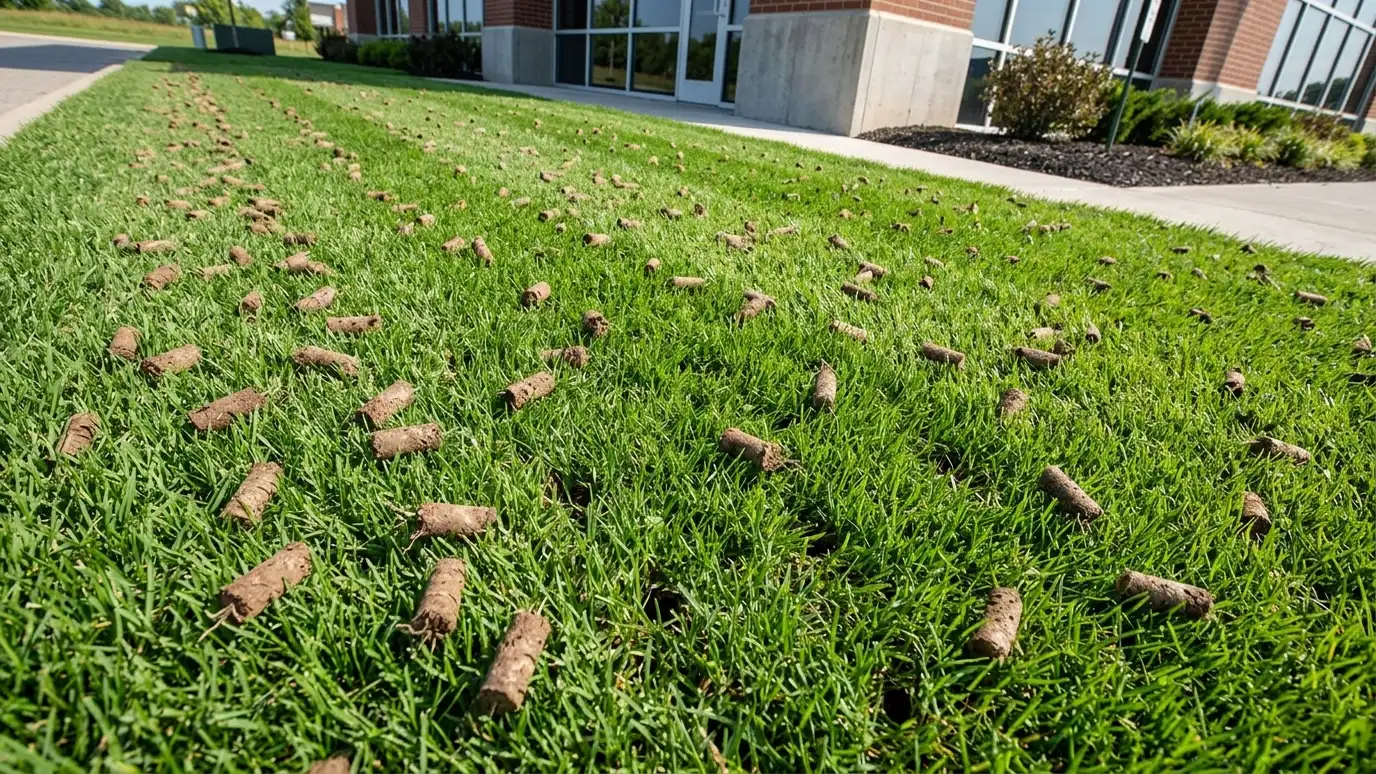
Fall is the most important season for fescue. Core aerate, overseed, fertilize and control weeds. Plant trees and shrubs while soil is warm. Begin leaf removal passes as trees drop.
Plant fall color and bulbs, and clean beds before winter.
Early winter
Finish leaf removal, winterize irrigation, apply a final fertilizer to cool-season turf and protect tender plants. Prepare for ice and snow by checking equipment, products and contracts.
Install holiday decor and lighting, and plan service visits during the display.
Using the calendar
Turn this calendar into a written schedule for each property, with target months for every task and a responsible party. Adjust for weather and plant conditions.
The Seasonal Planner tool on this site can help managers visualize the year.
Plan the year around fall for fescue and spring for resets, and write the schedule down.