Where claims come from
Many property claims start with landscape features: a limb that falls on a car, a lifted paver that trips a visitor, an icy ramp, a pond bank that collapses or a sightline blocked by shrubs at a driveway.
Most are predictable and preventable with regular inspection and prompt repair.
Trees
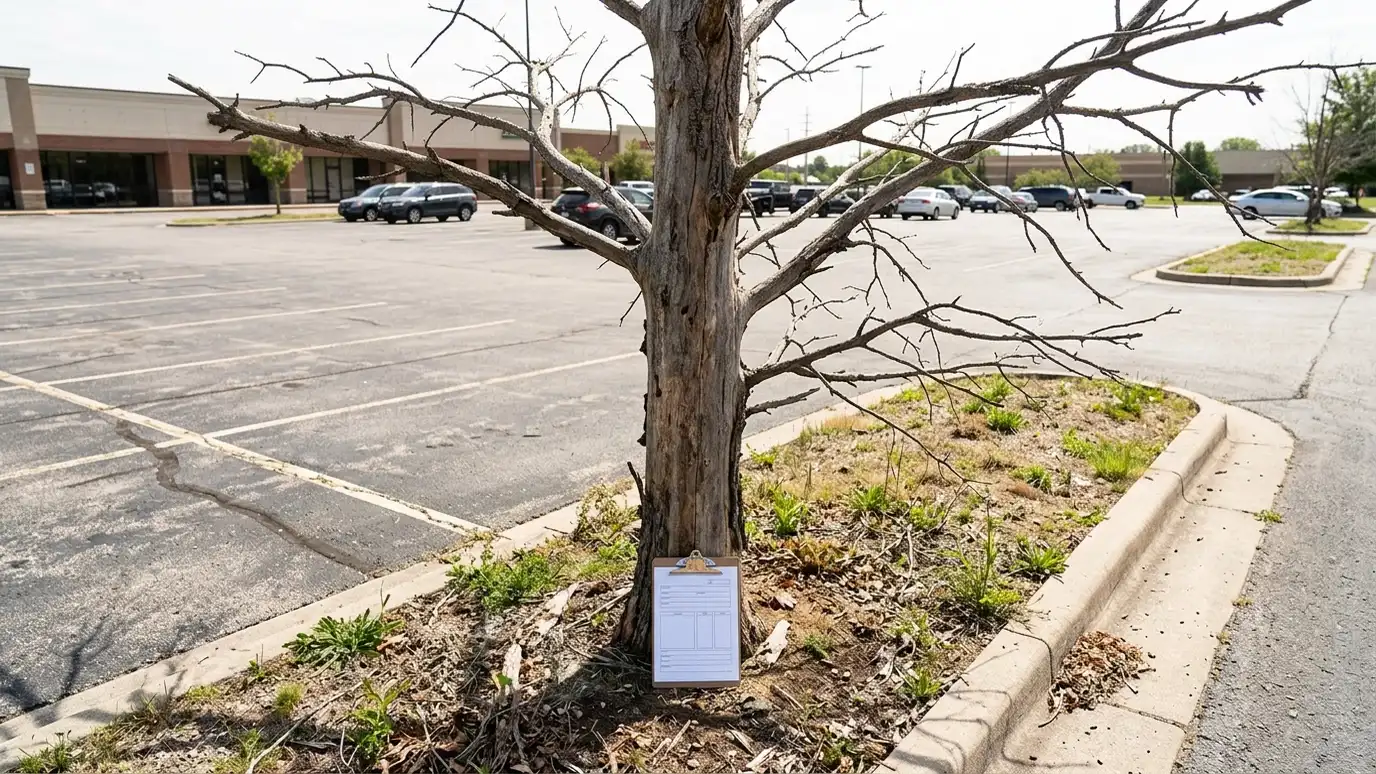
Large trees near parking, walks, play areas and buildings are the highest-consequence assets. Inspect annually, after storms and when construction occurs nearby. Prune dead wood and remove hazard trees promptly.
Keep records of inspections and work performed.
Walking surfaces
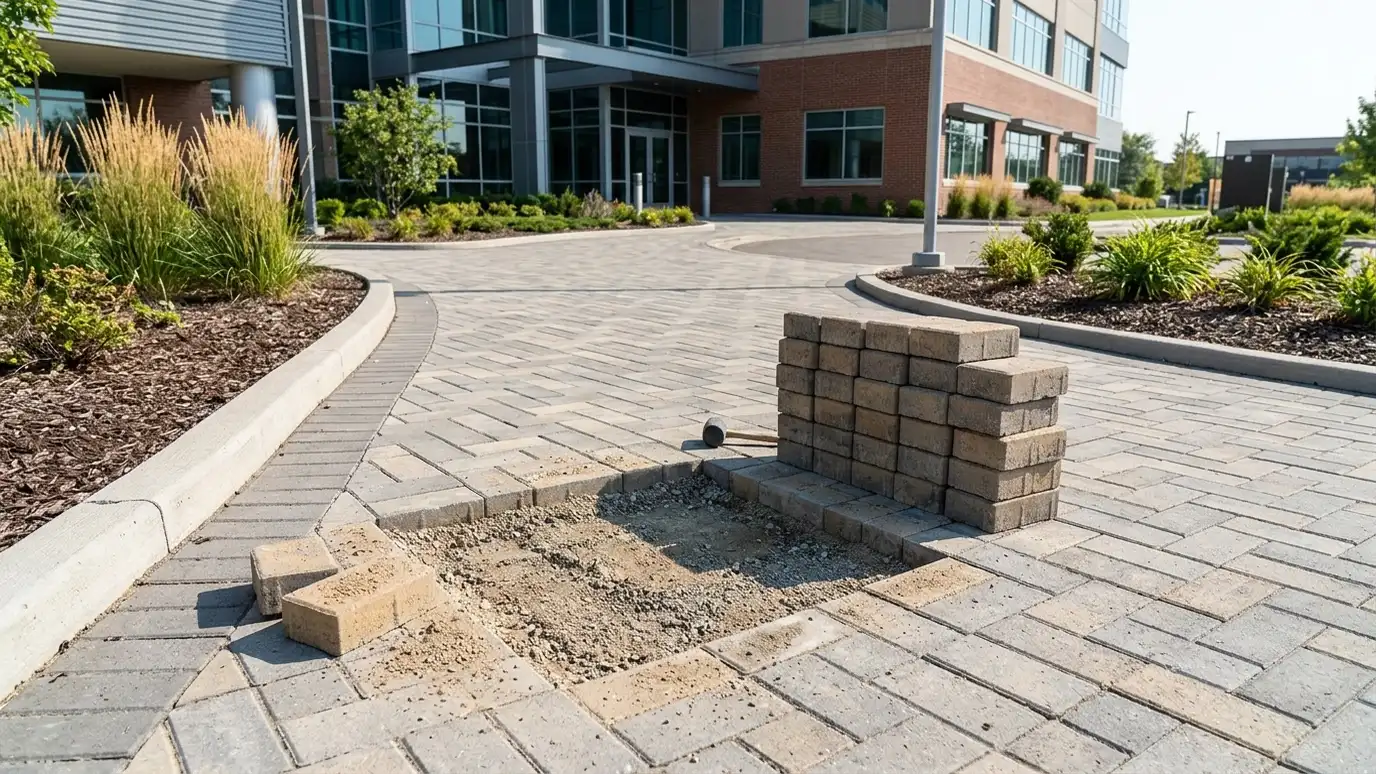
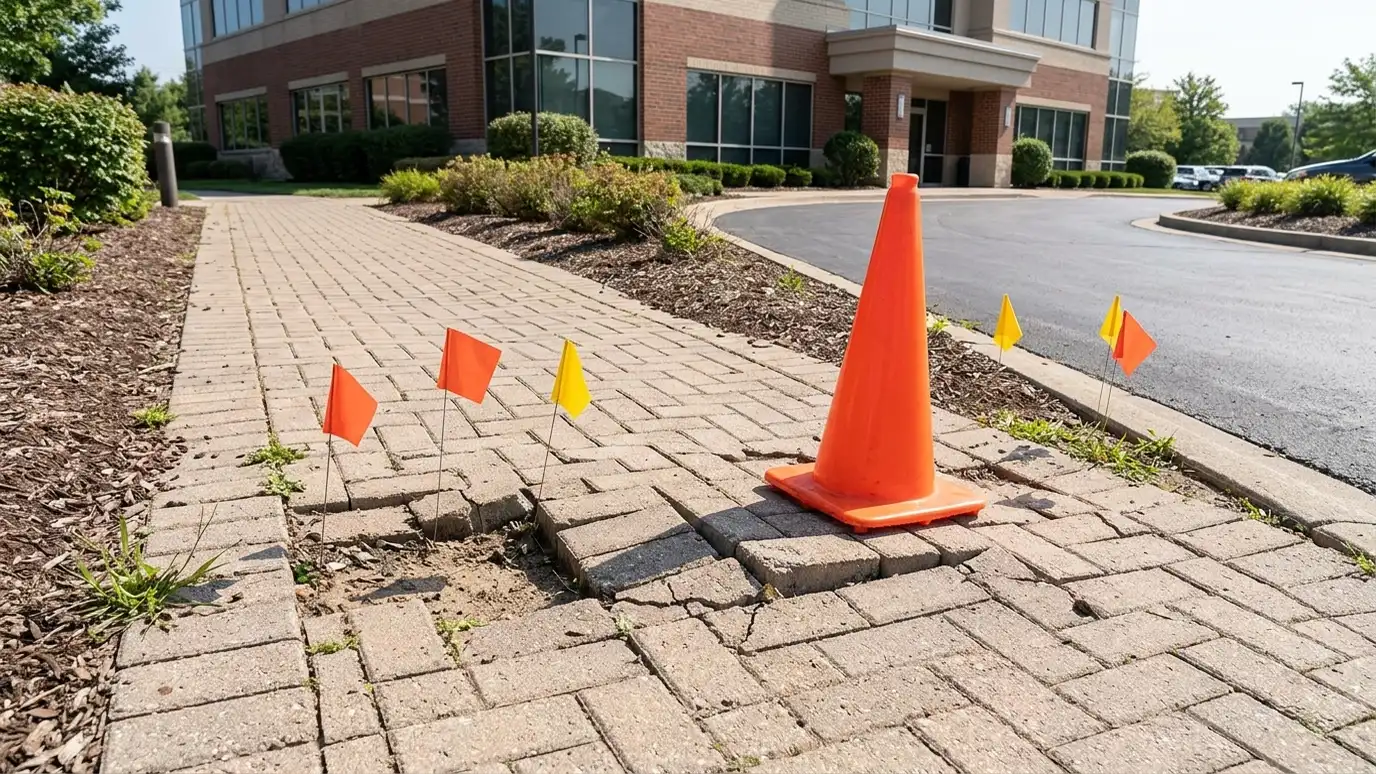
Cracks, lifted edges, settling pavers, tree roots and uneven joints create trip hazards. Walk key routes regularly, mark and report hazards and repair them quickly.
Even small height differences can cause falls for people with limited mobility.
Water features and slopes
Ponds, basins and steep banks require fencing or buffer plantings where appropriate, clear signage and regular inspection. Keep slopes stable and vegetation managed.
Check local rules for safety barriers.
Winter hazards
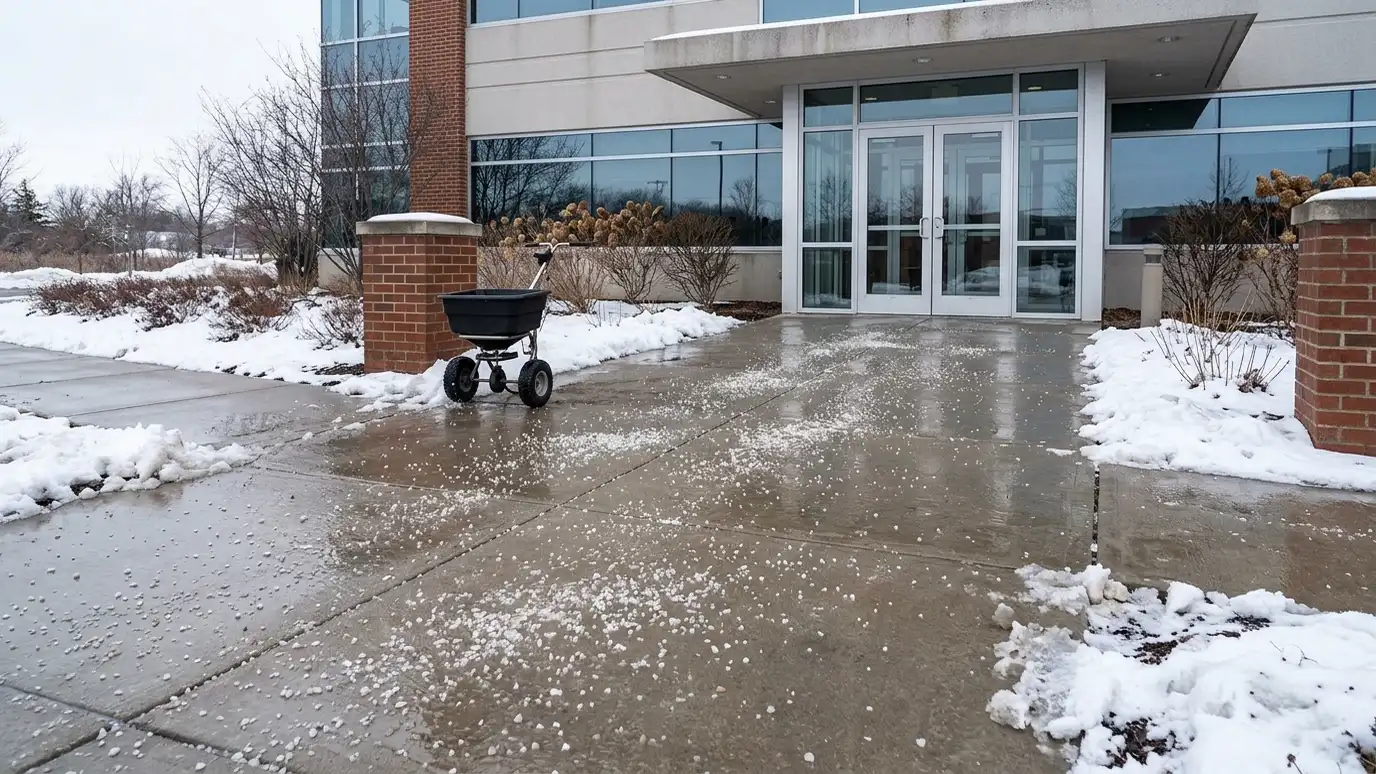
Plan for ice with pre-treatment, fast response on entrances and ramps, and records of actions. Fix drainage problems that create repeated ice patches.
Notify tenants and staff of hazards and closures.
Sightlines and lighting
Keep shrubs low at driveways and crosswalks and trees limbed up so drivers and walkers see each other. Maintain lighting so entrances and walks are visible after dark.
Report burned-out lights and dark areas to the right trade.
Document and communicate
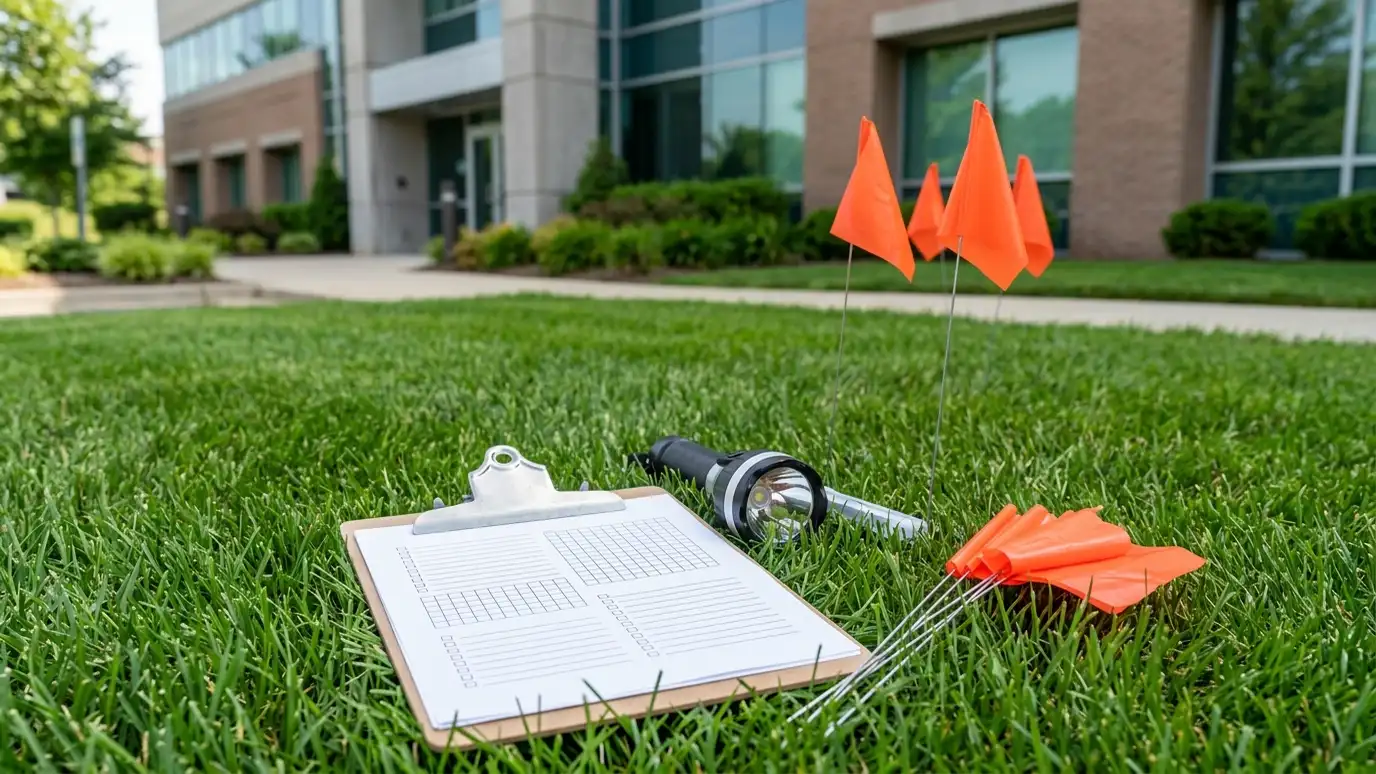
Keep logs, photos and reports from contractors. Share concerns with owners and boards in writing and track corrective actions. Documentation shows reasonable care.
Consult your attorney and insurance carrier on specific obligations.
Inspect on a schedule, fix hazards quickly and keep records of what was found and done.