Start with the soil
A soil test shows pH, organic matter and nutrient levels, so you correct real needs instead of guessing. Red clay soils often need lime, organic matter or specific nutrients to support dense turf.
Test every few years and after major renovations. The results guide the entire program.
Match the program to the grass
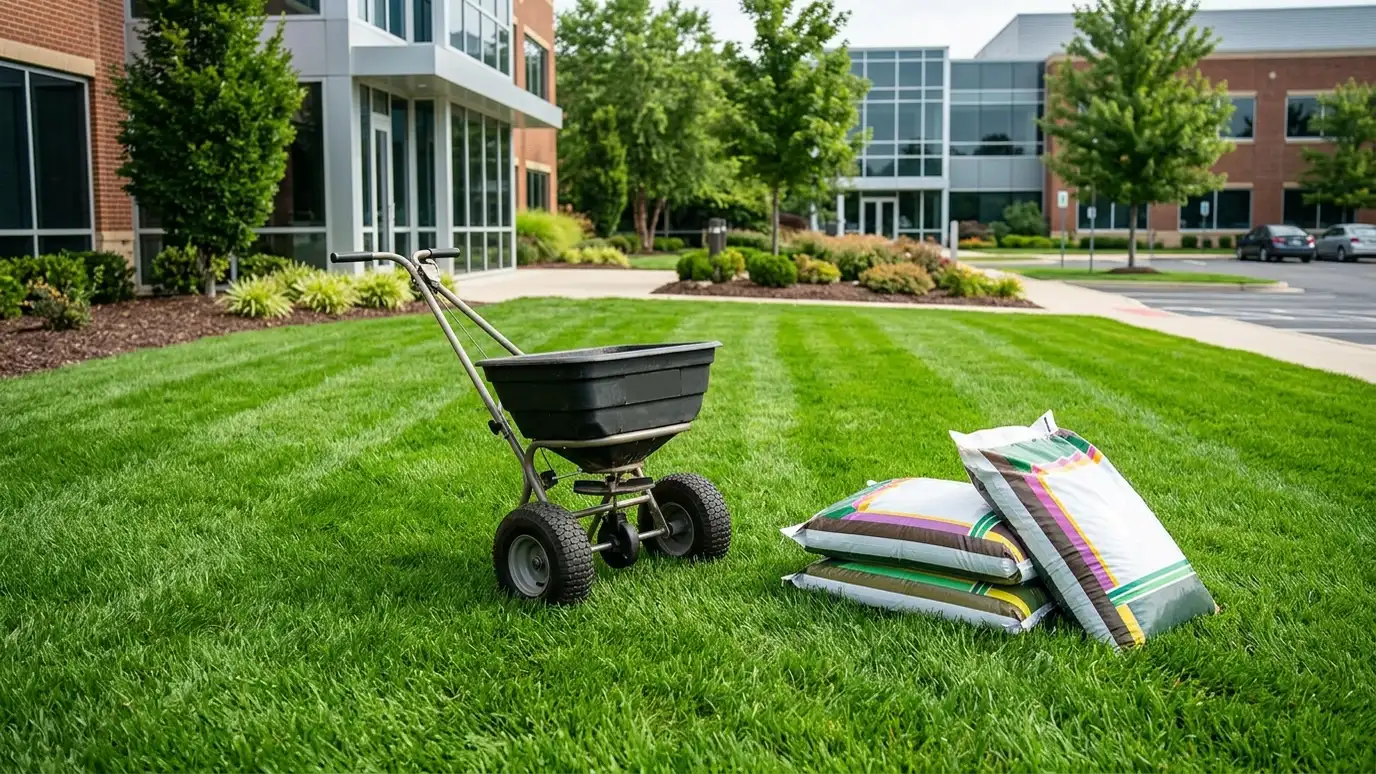
Cool-season grasses like tall fescue get most of their feeding in fall and spring, with little or none in summer heat. Warm-season grasses like bermuda and zoysia are fed from late spring through summer when they grow actively.
A program built for one grass can harm the other, so know what you have in each area.
Weed control that works
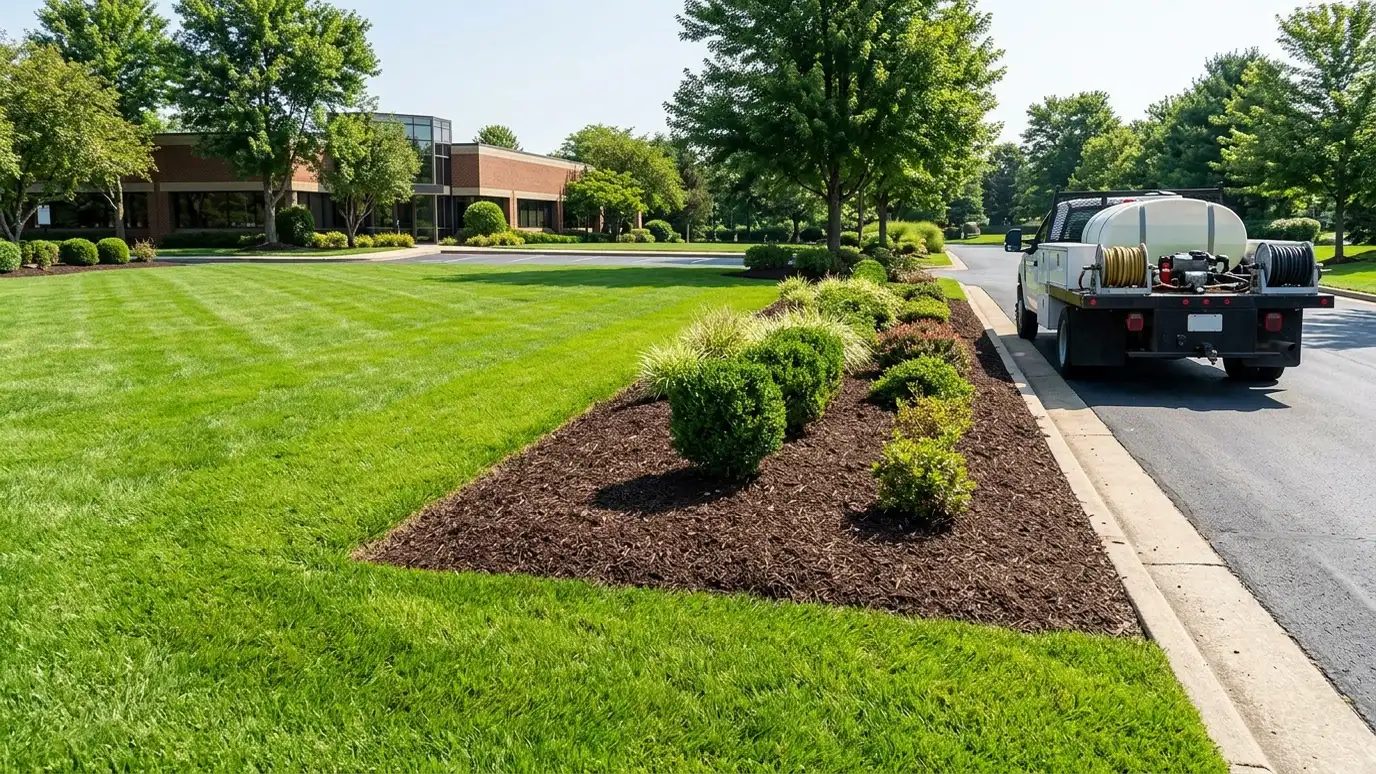
Pre-emergent herbicide in late winter prevents crabgrass and other summer annuals, and a second pass or a fall pre-emergent helps in some areas. Post-emergent products control broadleaf weeds that break through.
Dense turf is the best weed control, which is why feeding, mowing and aeration come first.
Aeration and overseeding
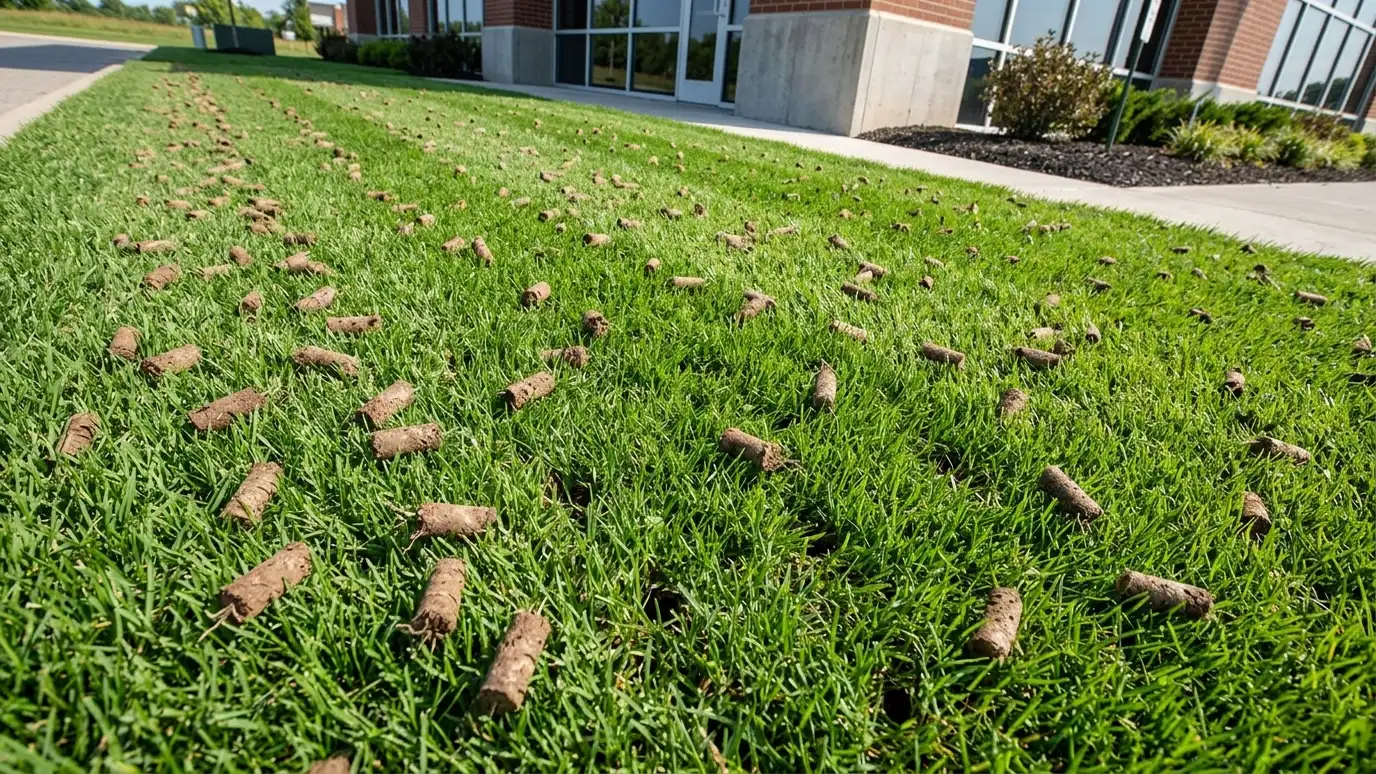
Core aeration relieves compaction and lets water, air and nutrients reach roots. For fescue, pair it with overseeding in early fall. Warm-season turf is aerated in late spring or early summer.
Thin, compacted lawns improve dramatically after one or two seasons of this treatment.
Mowing as part of the program
Mow at the right height, with sharp blades, and never remove more than a third of the leaf at once. Tall fescue does best at three to four inches, and bermuda and zoysia are cut lower.
Good mowing practice strengthens turf and reduces disease and weeds.
Pests and disease
Grubs, fungus and other problems appear in warm, humid conditions. Watch for brown patches that do not respond to watering and take samples before treating. Early identification saves money and turf.
Preventive treatments may be justified on high-visibility areas with a history of trouble.
Measure and adjust
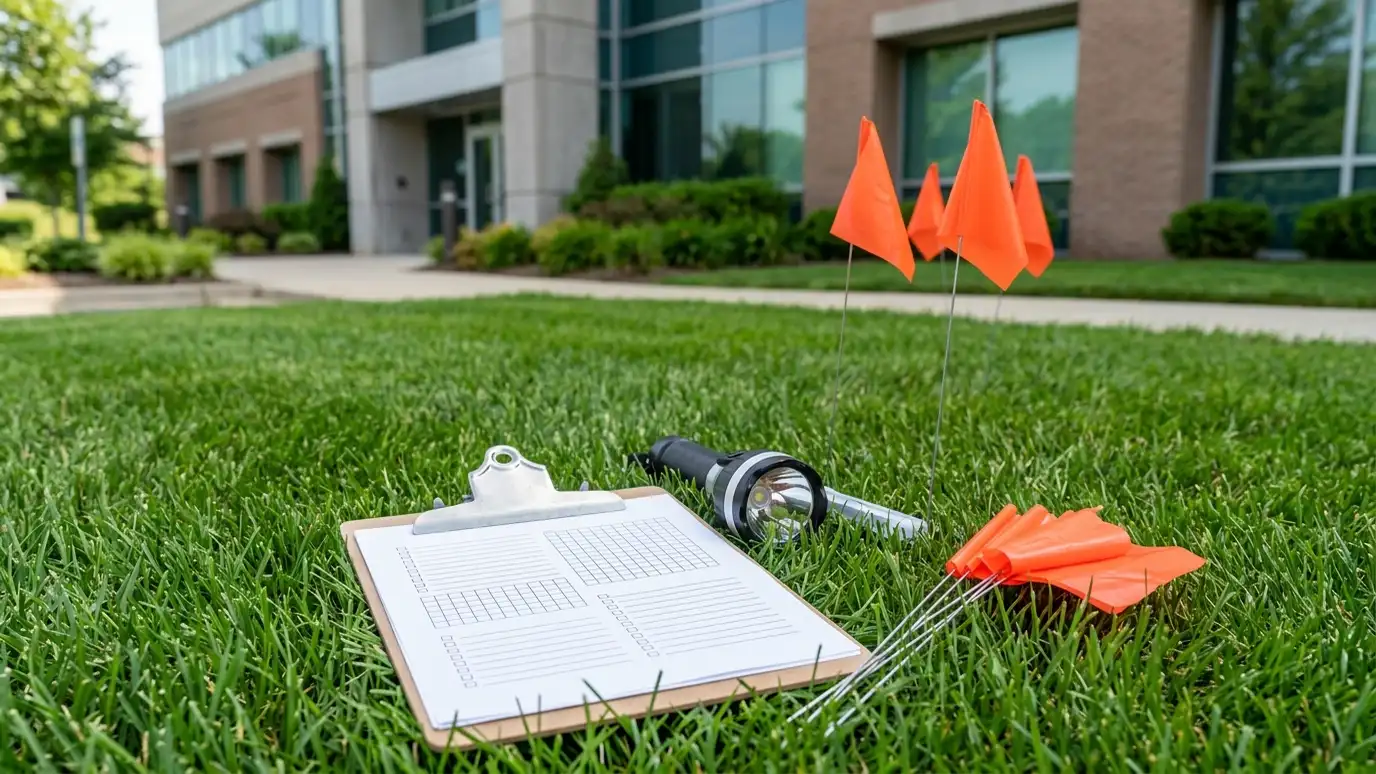
Walk the property each season, record density, color and weeds, and adjust the program. Keep application records so you know what was applied and when.
Share the plan and results with owners or boards so the value is clear.
Test the soil, match the calendar to the grass and let dense turf do most of the weed control.