
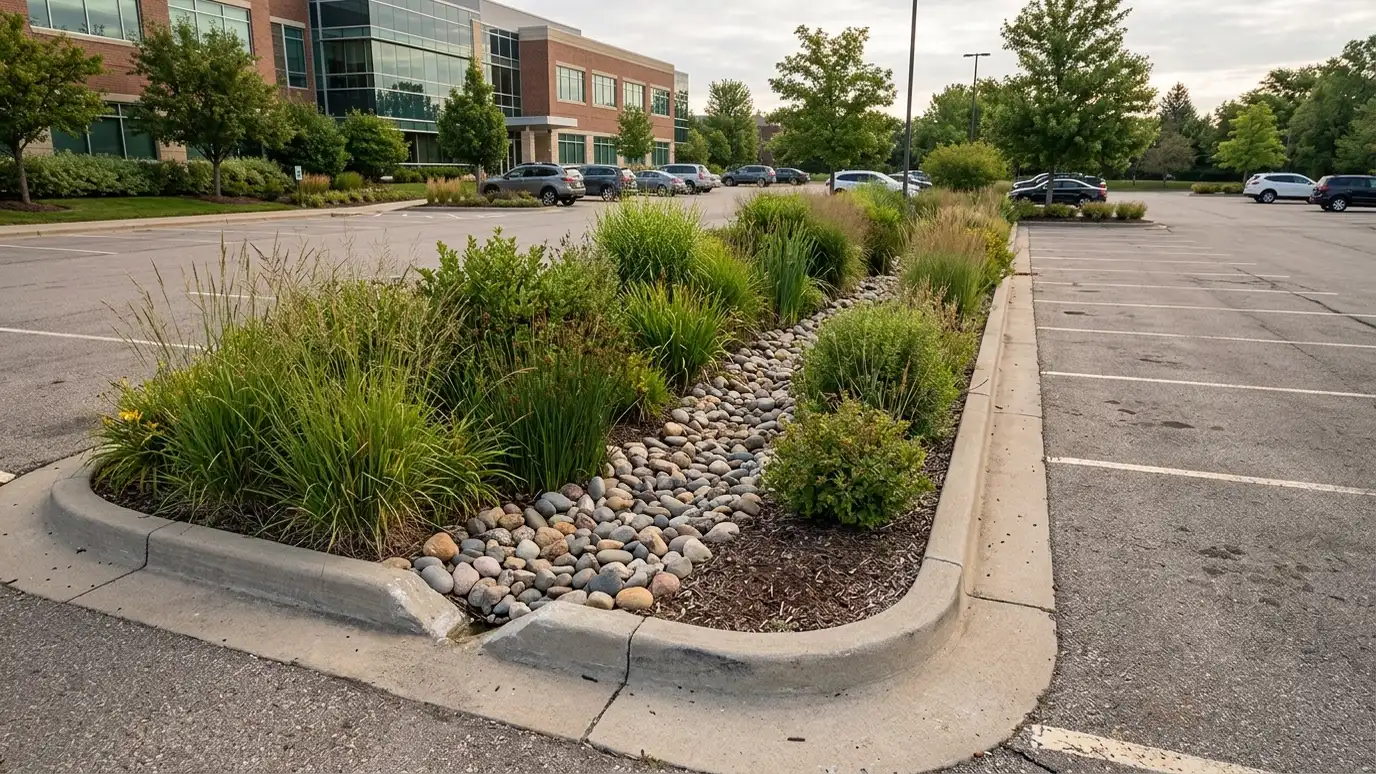
Stormwater Bioswales and Rain Gardens
Planted stormwater features that slow, clean and absorb runoff in parking lot islands, buffers and low spots, while looking like a landscape.
Stormwater rules push commercial and community properties to manage runoff on site, and the old answer, a concrete pipe and a pond, is not always the best one. Bioswales and rain gardens are planted depressions designed to capture runoff, let it soak into the ground and filter pollutants through soil and roots. They reduce flooding, protect streams and ponds and can count toward stormwater requirements, all while adding greenery to places that would otherwise be bare turf or pavement. In Nashville, where heavy downpours are routine, these features are increasingly used on offices, campuses and communities.
We install and maintain bioswales and rain gardens as functional landscape features. Design starts with the drainage area and soil percolation, then sets depth, bottom width, side slopes and inlet and overflow details. Soil mixes are specified for infiltration, and plants are selected for their ability to handle wet and dry cycles, with native sedges, rushes, grasses and perennials. Mulch or stone protects soil, and we plant densely to shade out weeds. Because plants do the work, maintenance matters in the first years, with watering, weeding and inlet cleaning, and we provide plans and service to keep the feature performing.
Captures and cleans runoff
Planted depressions slow water and filter it through soil and roots.
Designed for infiltration
Soil mixes, depths and overflows are set for how fast the site drains.
Plants that handle extremes
Native species survive both wet and dry cycles with little inputs.
Care plan built in
First-years care keeps the feature healthy and the inlets clear.
What is included
- Drainage area and soil review
- Design for depth, inlet and overflow
- Excavation and soil mix installation
- Native plant installation and mulch
- Establishment watering and weeding
- Long-term care plan
See the transformation.
Drag the handle to compare.
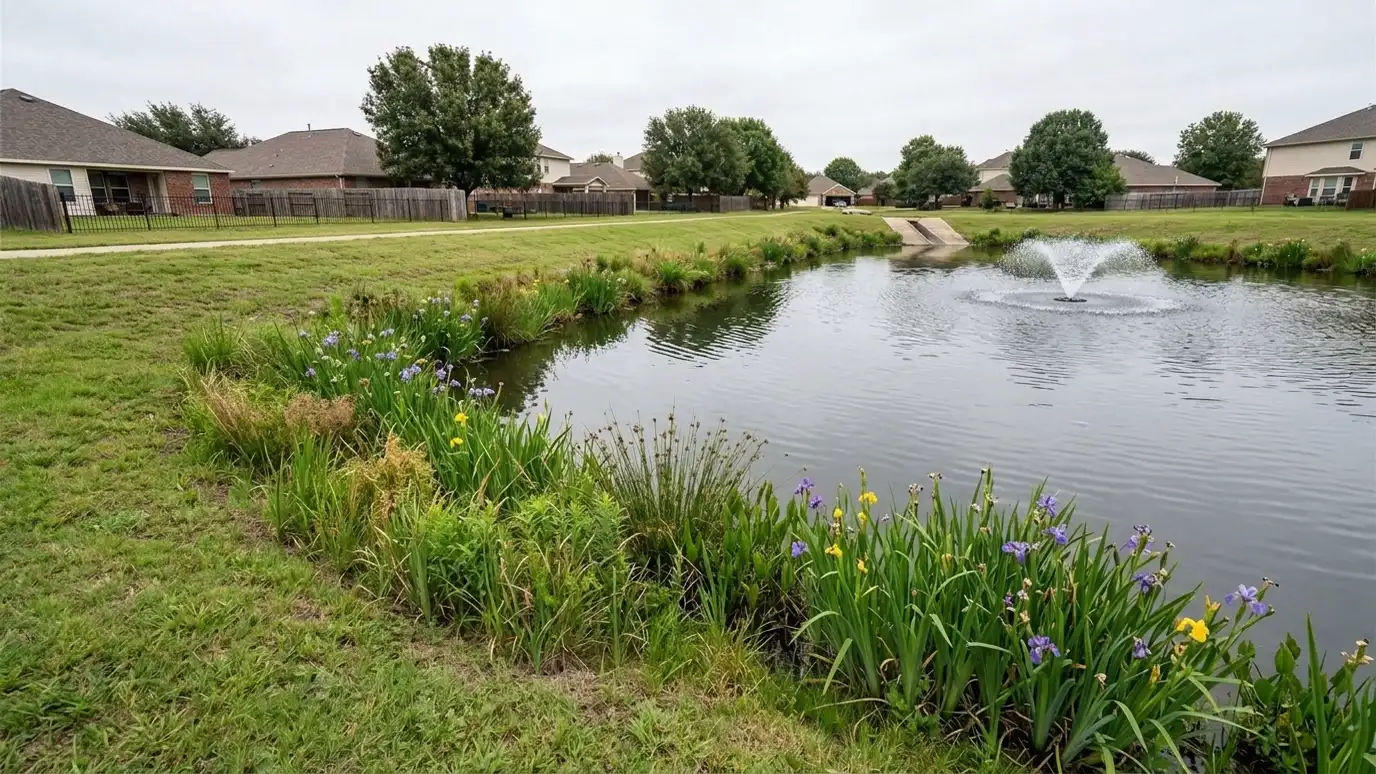
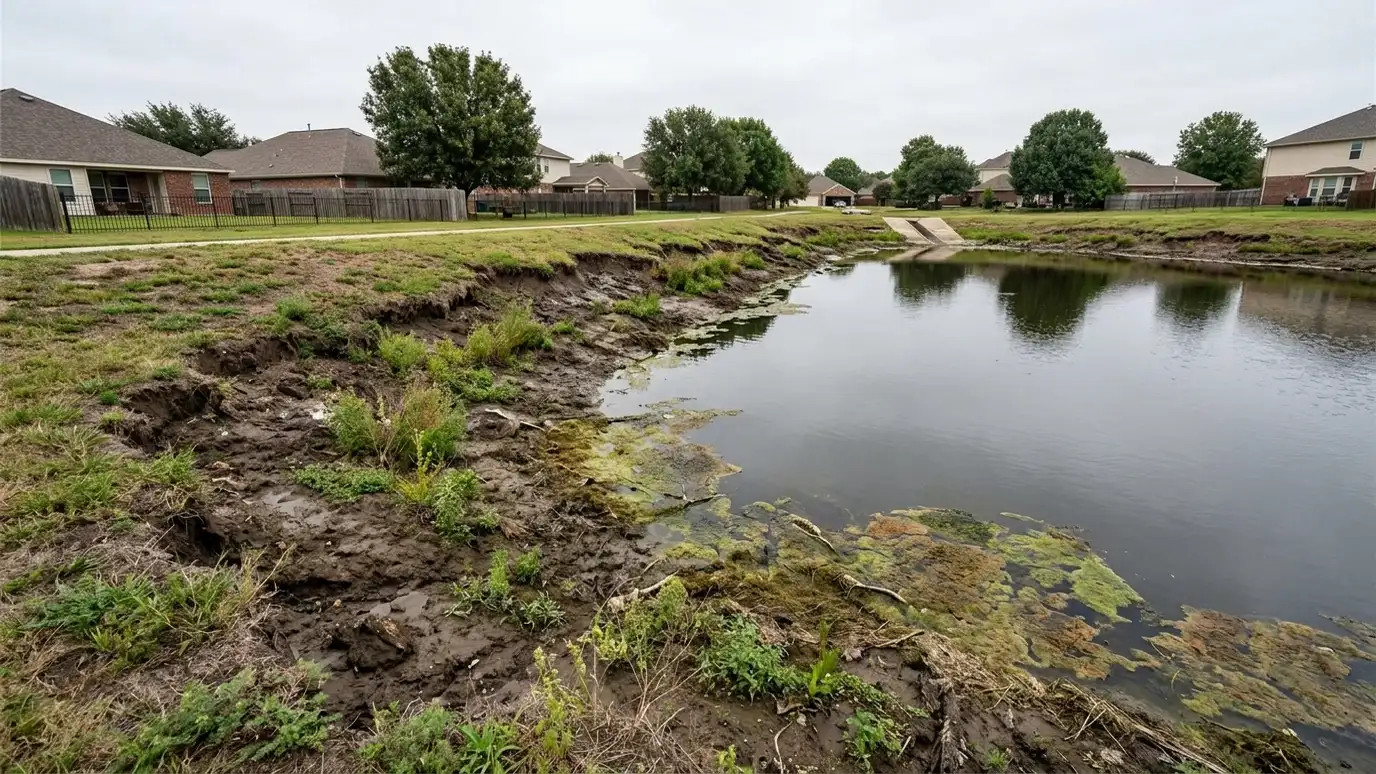 BeforeAfter
What you get with Bioswales and Rain Gardens
Natural drainage
Soak in, not run off.
Cleans water
Filters pollutants.
Less flooding
Slows peak flow.
Compliance support
May help meet stormwater rules.
Looks like landscaping
Color and structure.
Care plan
First-years guidance.
Property types and guides for Bioswales and Rain Gardens
Every topic has its own page with what to expect and how we approach it.
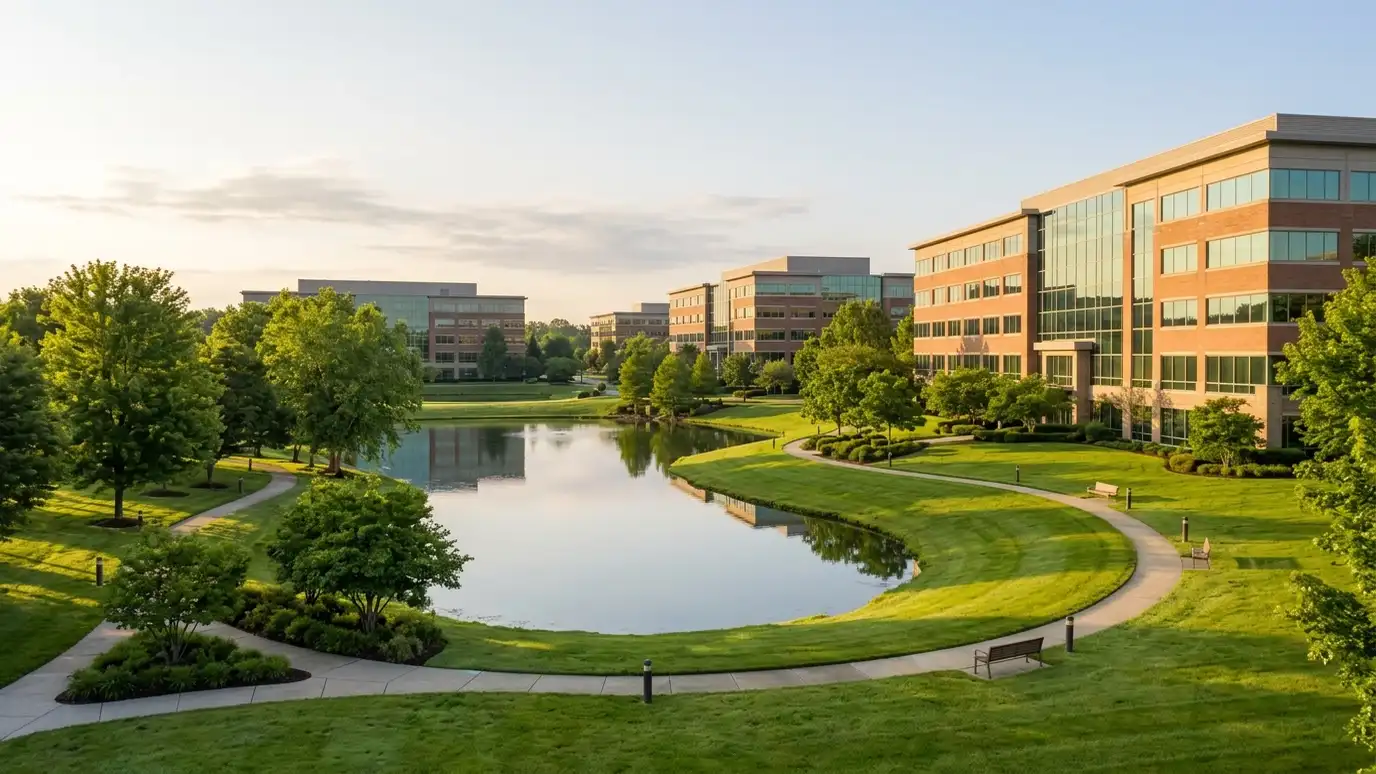 Property typeOffice Parks and CampusesTenants and visitors judge a business by its grounds. Learn what office parks and corporate campuses need for…Learn more
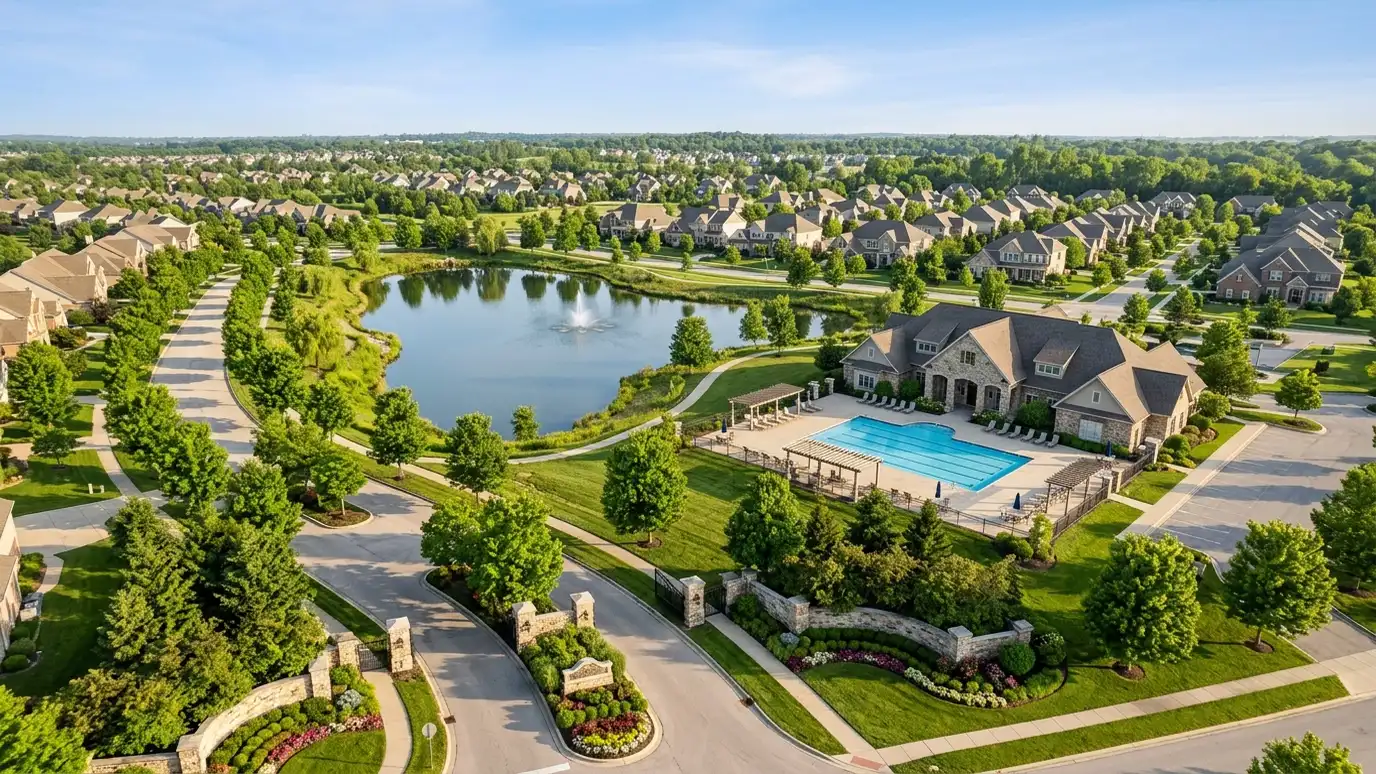 Property typeHOAs and CommunitiesHomeowner associations need reliable common-area care, a clear scope the board can approve and a contractor who communicates…Learn more
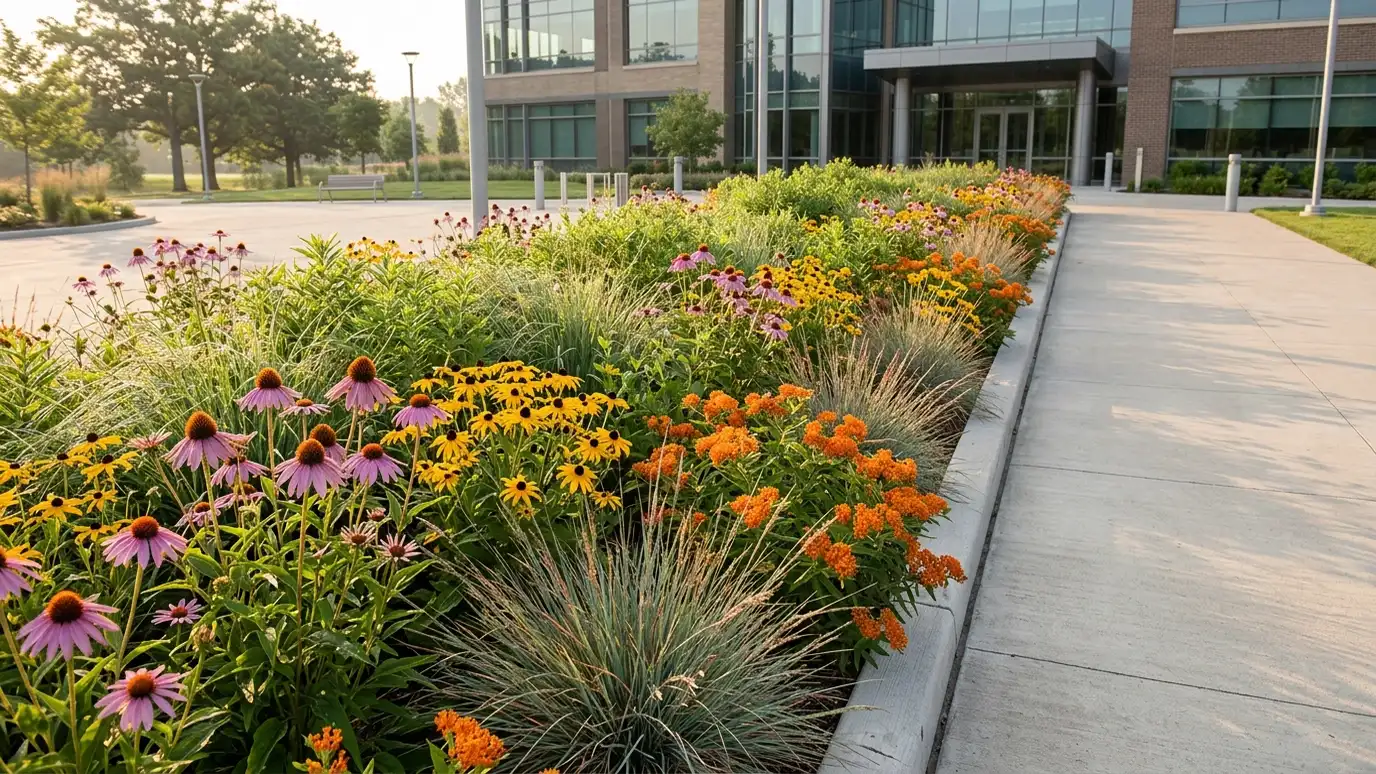 Topic guideNative PlantsNative plants cut watering and replacement while supporting pollinators. See which Middle Tennessee natives perform well in commercial…Learn more
Commercial Landscaping Budget Planner
Pick a service, a size and a few add-ons and get a ballpark planning range for your property.
Our process, start to finish.
- 01
Call and schedule
You tell us about the property and what you need, a new program, a contractor change or a project, and we set a walk that fits your day.
- 02
Walk and measure
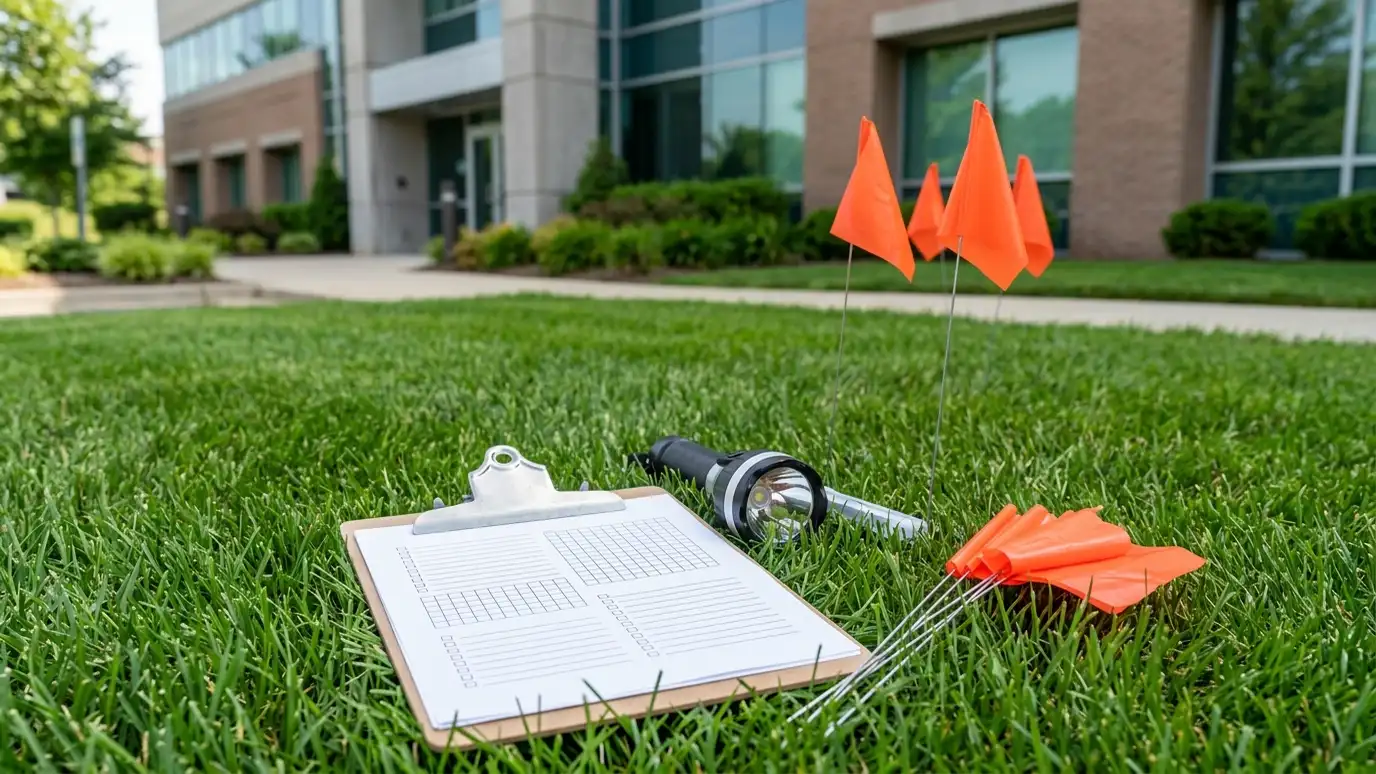
We walk the grounds with the manager, owner or a board member, measure turf and beds and note trees, ponds, irrigation, drainage and problem areas.
- 03
Proposal and options
You receive an itemized written proposal with areas, tasks, frequencies, seasonal services and options, ready for a board or owner to review.
- 04
Onboarding
We document starting conditions with photos, map the property, set the schedule and contacts and complete any catch-up work in the first month.
- 05
Service and projects
Crews follow the schedule, projects are phased around your operations and visits are logged so you can see what was done.
- 06
Review and plan ahead
We review results with you each quarter, adjust the scope as needed and plan seasonal work and reserve projects for the year ahead.
Bioswales and Rain Gardens FAQ
Will a rain garden hold standing water?
It is designed to drain within a day or two, so it should not stay wet or breed mosquitoes.
Do bioswales count for stormwater credit?
They may, depending on local rules and design, and the project engineer confirms that.
What plants work best?
Native sedges, rushes, grasses and perennials that tolerate wet and dry periods.
Do they need maintenance?
Yes. Weeding and cleaning inlets matter most in the first few years.
Can they fit in a parking lot island?
Yes. Curb cuts let water in, and the island is shaped to hold and absorb it.
You may also need.
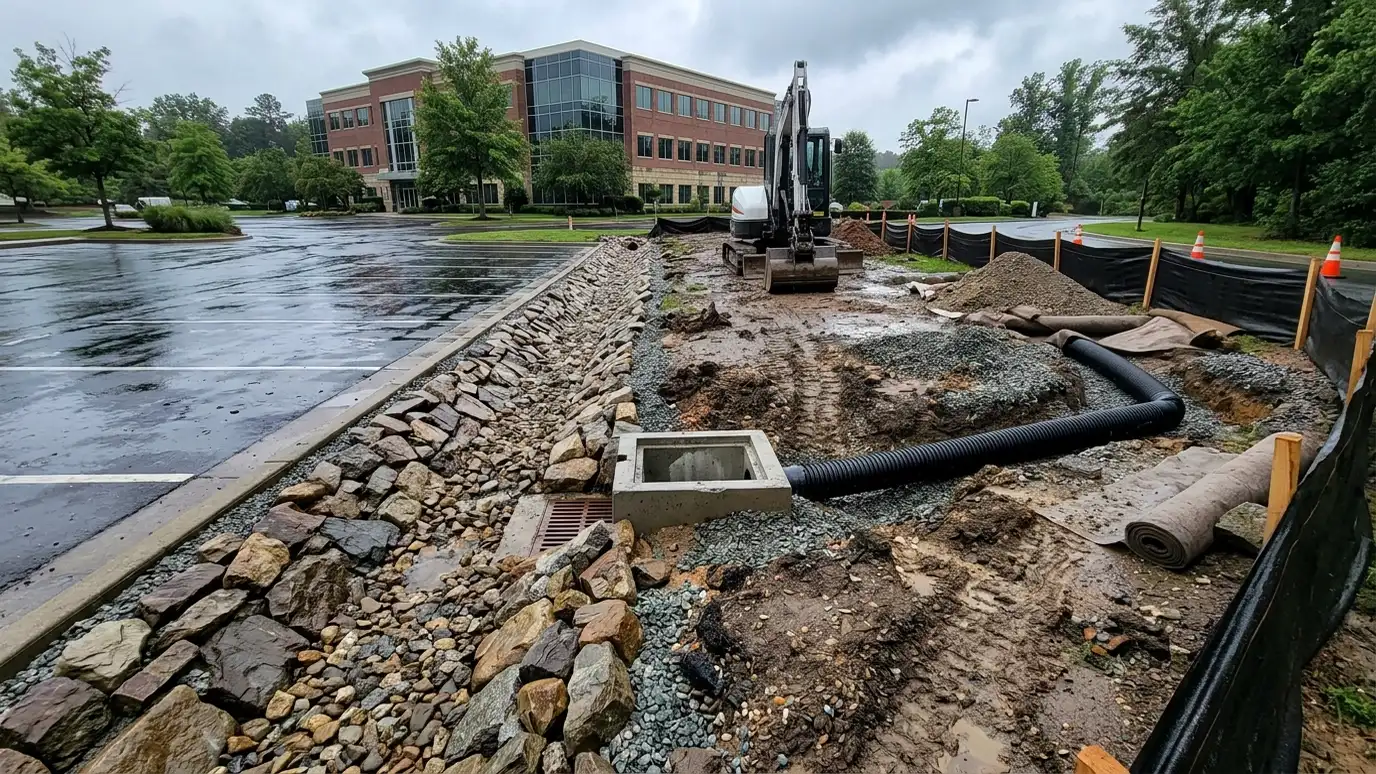 Drainage SolutionsFrench drains, catch basins, swales and regrading that stop ponding, protect buildings and keep lots, lawns and walkways…Explore
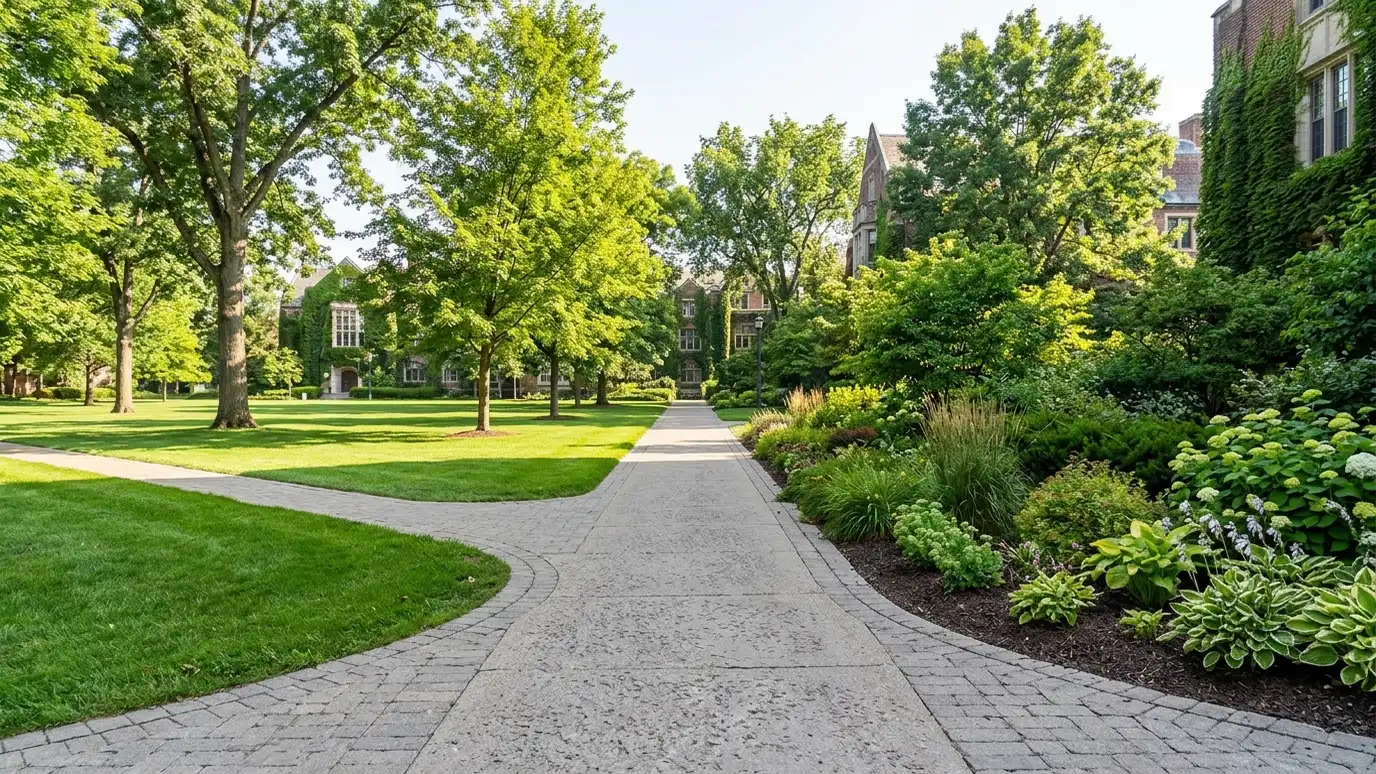
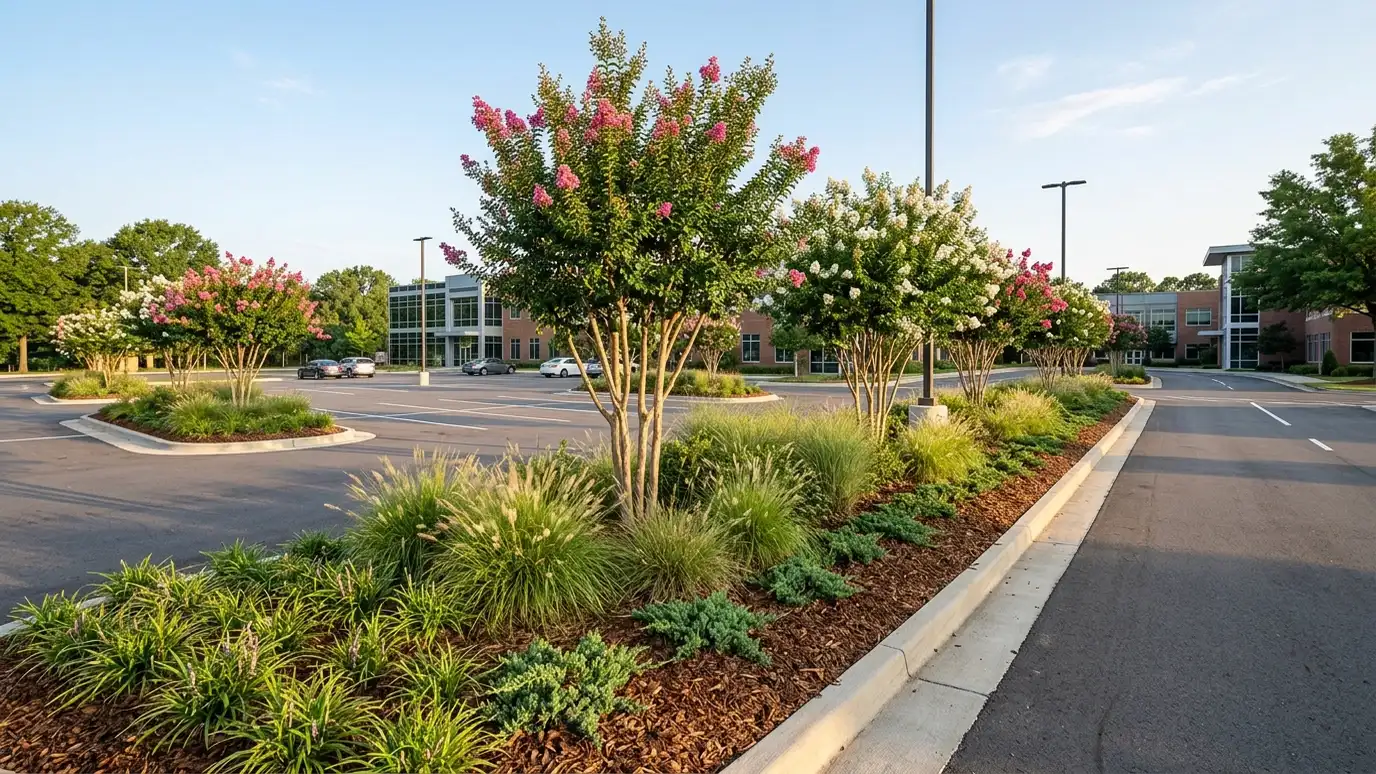 Lot Islands and MediansTough, low-maintenance planting for parking lot islands, medians and drive aisles: trees, groundcovers and grasses that survive heat…Explore
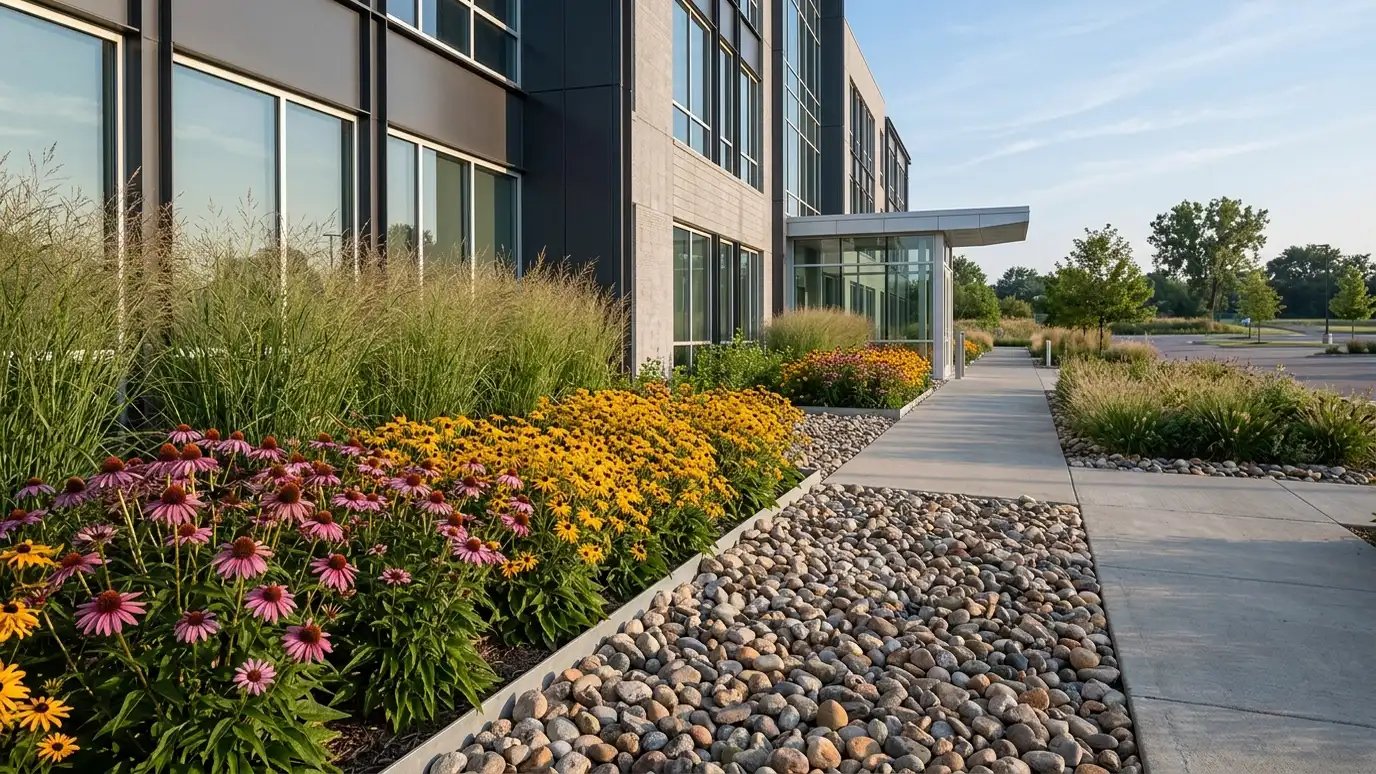 Low-Maintenance LandscapesNative and drought-tolerant planting designs that cut mowing, watering and replacement while looking intentional and supporting pollinators.Explore
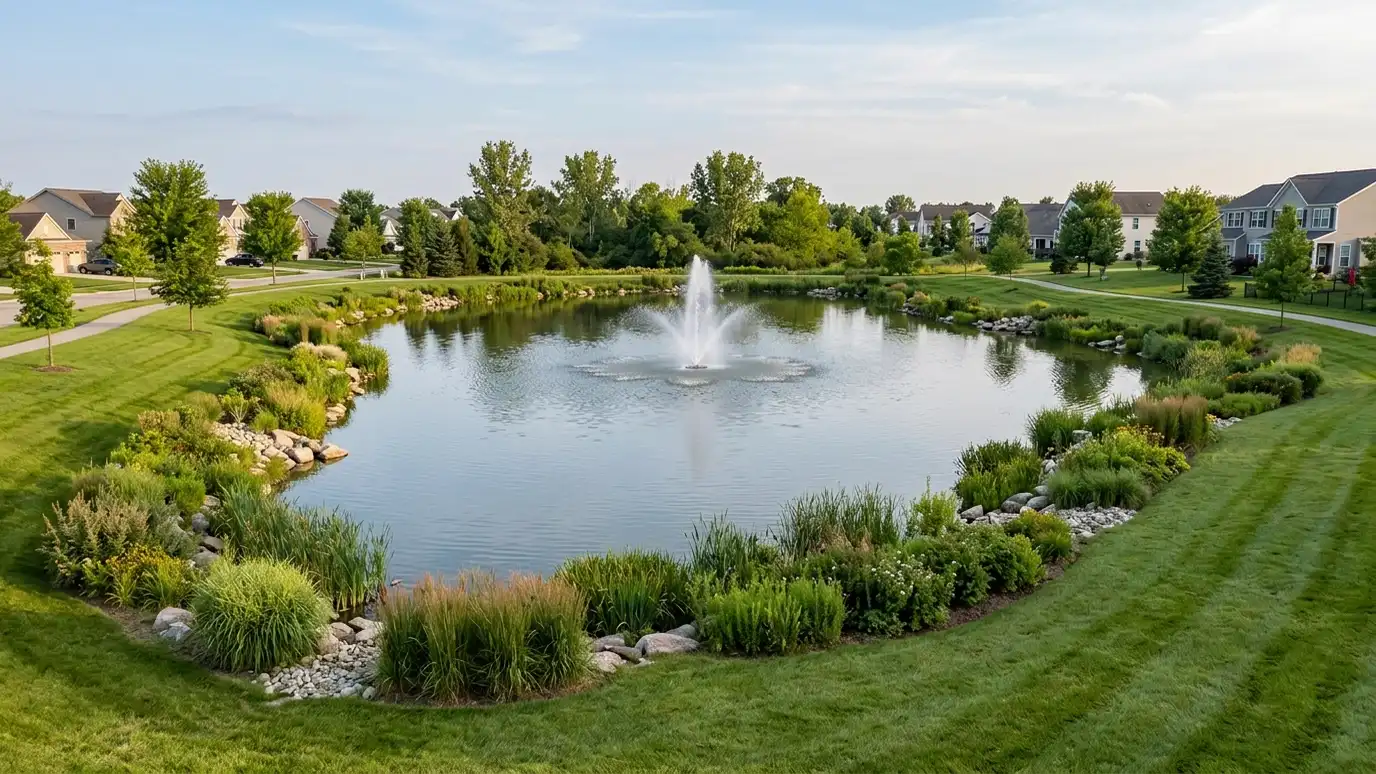 Pond and Basin CareMaintenance for neighborhood ponds and stormwater basins: bank mowing, shoreline plants, erosion repair, aeration checks and inlet and…Explore
Bioswales and Rain Gardens across Middle Tennessee.
Get your free Bioswales and Rain Gardens proposal.
Tell us about the property and we will call you back to set up a site walk.
Or call (615) 357-7797 to talk now.