What sustainable means here
For commercial properties, sustainable landscaping means lower inputs, longer plant life, reduced runoff and better habitat, without sacrificing appearance. It is as much about cost control as environmental goals.
Many sustainability steps pay for themselves through lower water, labor and replacement costs.
Right plant, right place
Plants that match sun, soil and moisture thrive with less care. Native and adapted plants handle Middle Tennessee conditions well and reduce the need for irrigation, fertilizer and replacement.
Avoid invasive species that spread and cost more over time.
Reduce turf where it adds no value
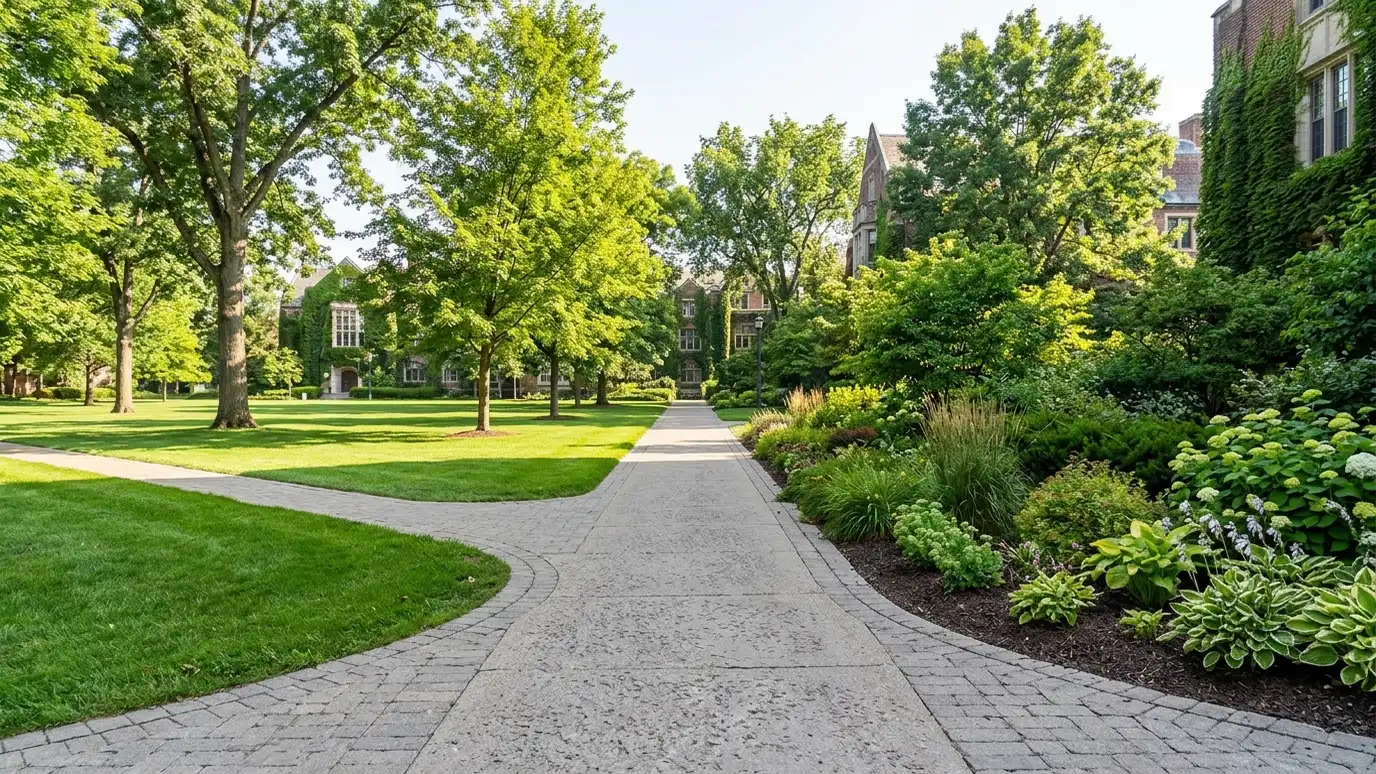
Turf is the most expensive landscape feature to maintain. Converting unused turf, steep banks and shaded areas to native plantings, groundcover or meadow can cut mowing, water and chemicals.
Keep turf where people use it and where it supports the property’s image.
Manage water on site
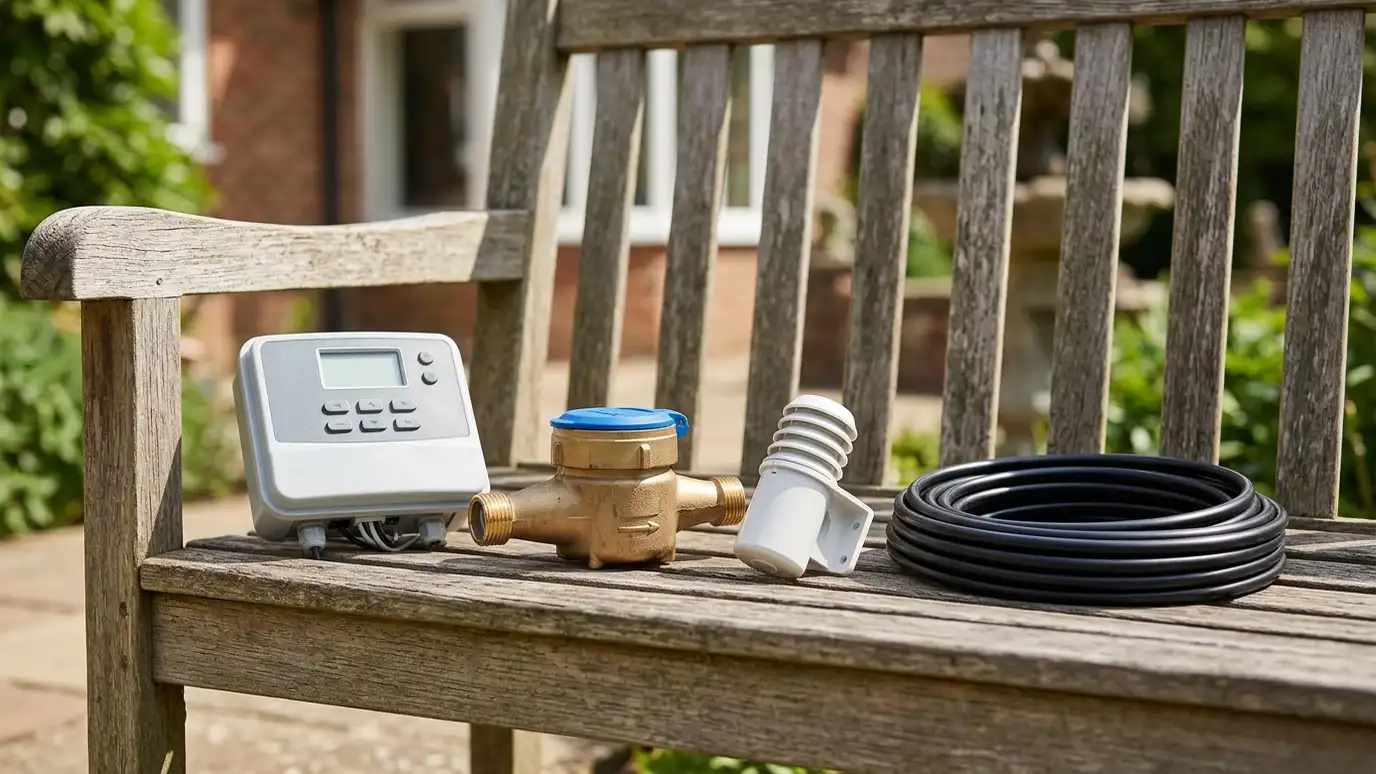
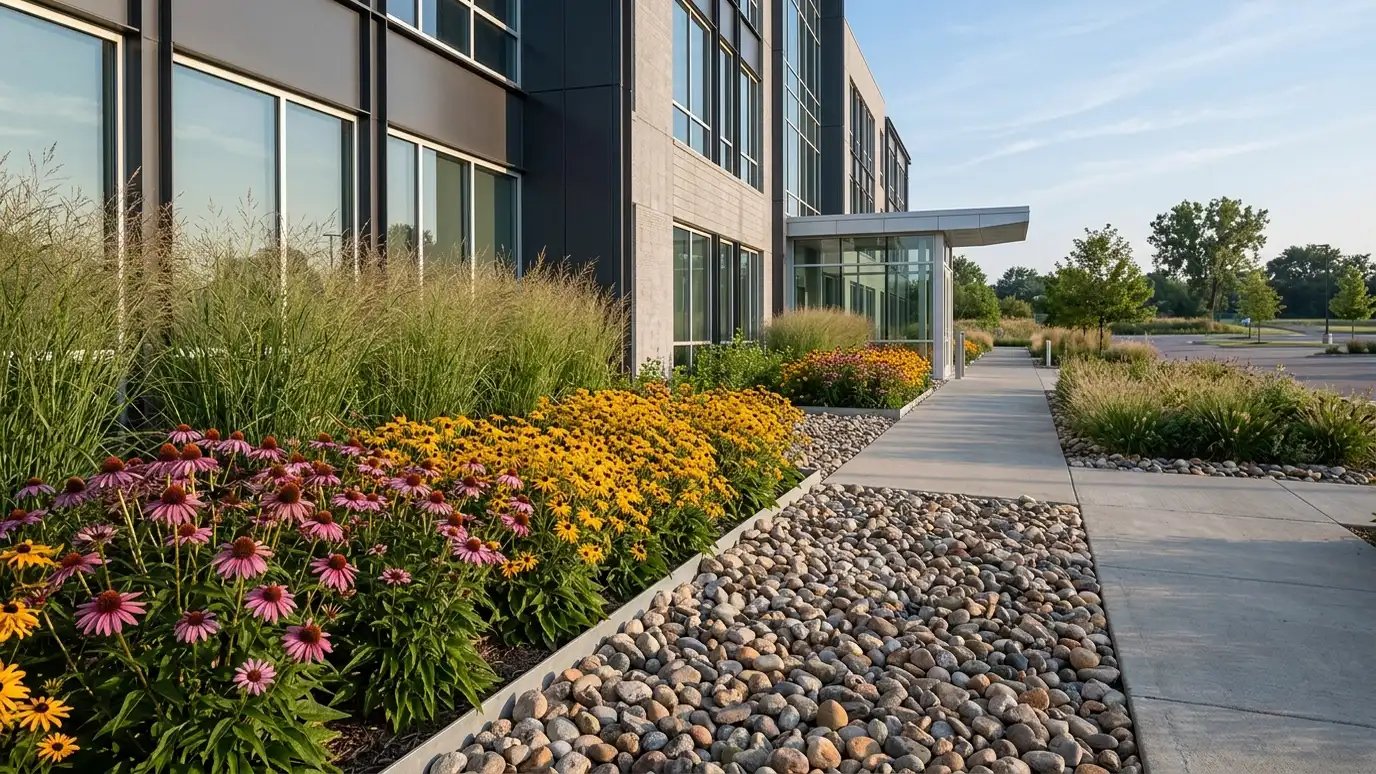
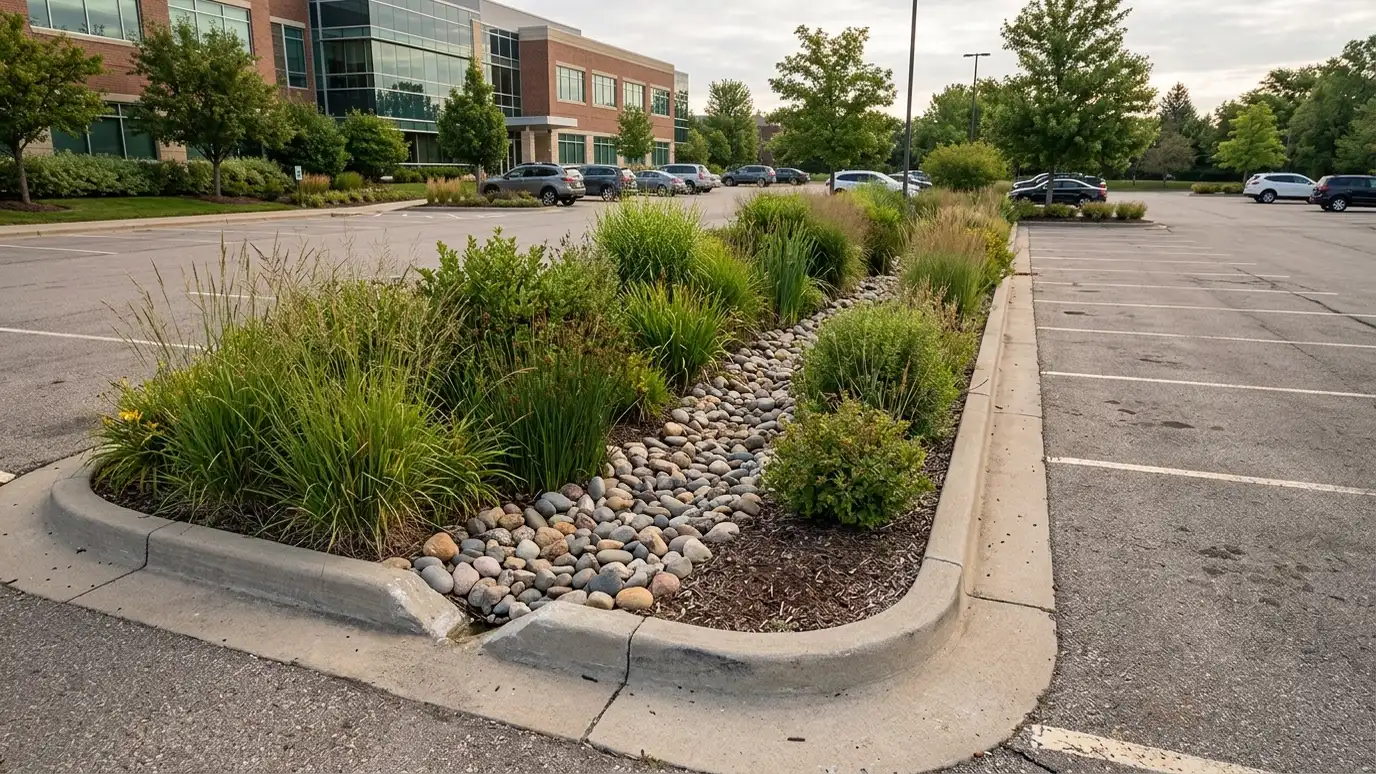
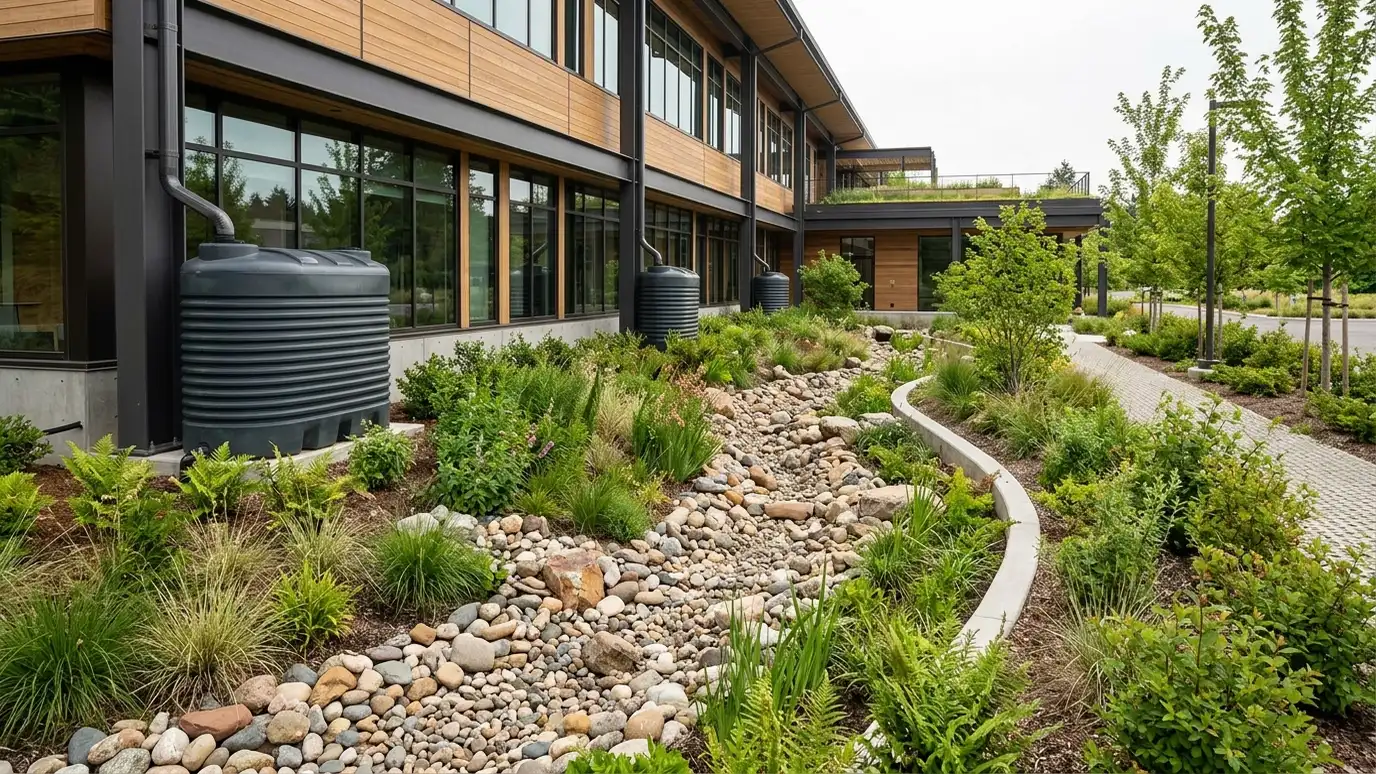
Rain gardens, bioswales, permeable paving and planted basins slow and clean runoff. Smart irrigation, drip and mulch reduce water use. Rain barrels or cisterns can capture roof water for beds.
Check local stormwater requirements and incentives.
Build healthy soil
Healthy soil holds water, feeds plants and reduces fertilizer needs. Add compost, avoid compaction, protect roots and mulch beds. Test soil to guide amendments.
Good soil is the foundation of every other sustainable practice.
Support habitat
Native flowers, shrubs and trees feed pollinators and birds. Leave some seed heads and leaf litter where tidy design allows, and reduce unnecessary pesticide use.
Habitat features can also be a visible sign of an owner’s commitment.
Measure and tell the story
Track water use, mowing hours, pesticide use and plant survival. Share results with owners, tenants and residents, and use signs or newsletters to explain the program.
Clear communication builds support for design changes that may look different at first.
Cut turf where it has no job, plant natives that fit the site and let soil and stormwater features do more of the work.