
Snow and Ice Melt Products Guide for Commercial Properties
Rock salt, calcium chloride, magnesium chloride and brine compared by temperature range, cost and effects on concrete and plants.
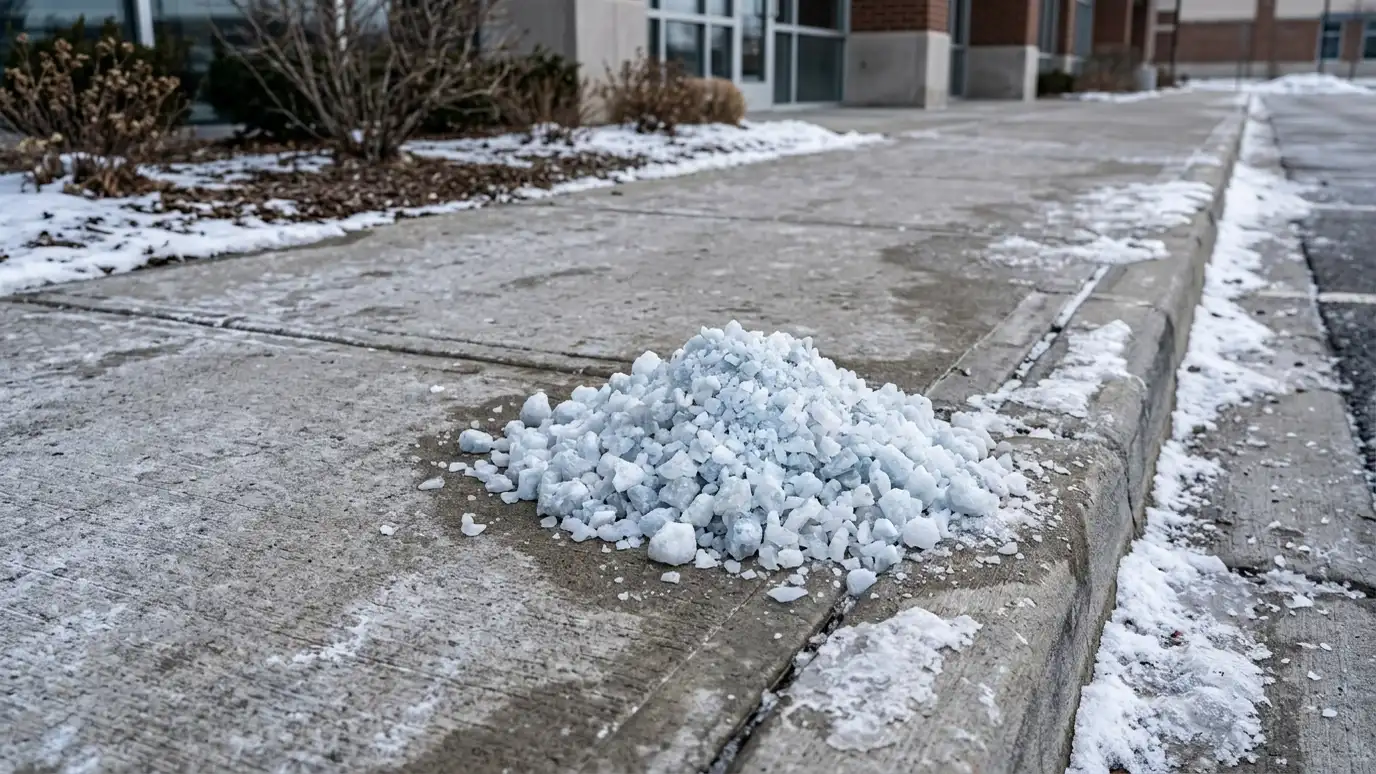
Choosing an ice melt product is a balance of cost, effectiveness and side effects. Rock salt is inexpensive and widely used but stops working at low temperatures and can damage concrete, metal and plants. Calcium chloride works at much lower temperatures and acts quickly but costs more. Magnesium chloride is gentler on plants and surfaces in many cases and works at moderate temperatures. Liquid brine applied before a storm can prevent bonding of ice, using far less material. In Nashville, where freezing events are short, brief and often involve rain turning to ice, timing matters as much as product.
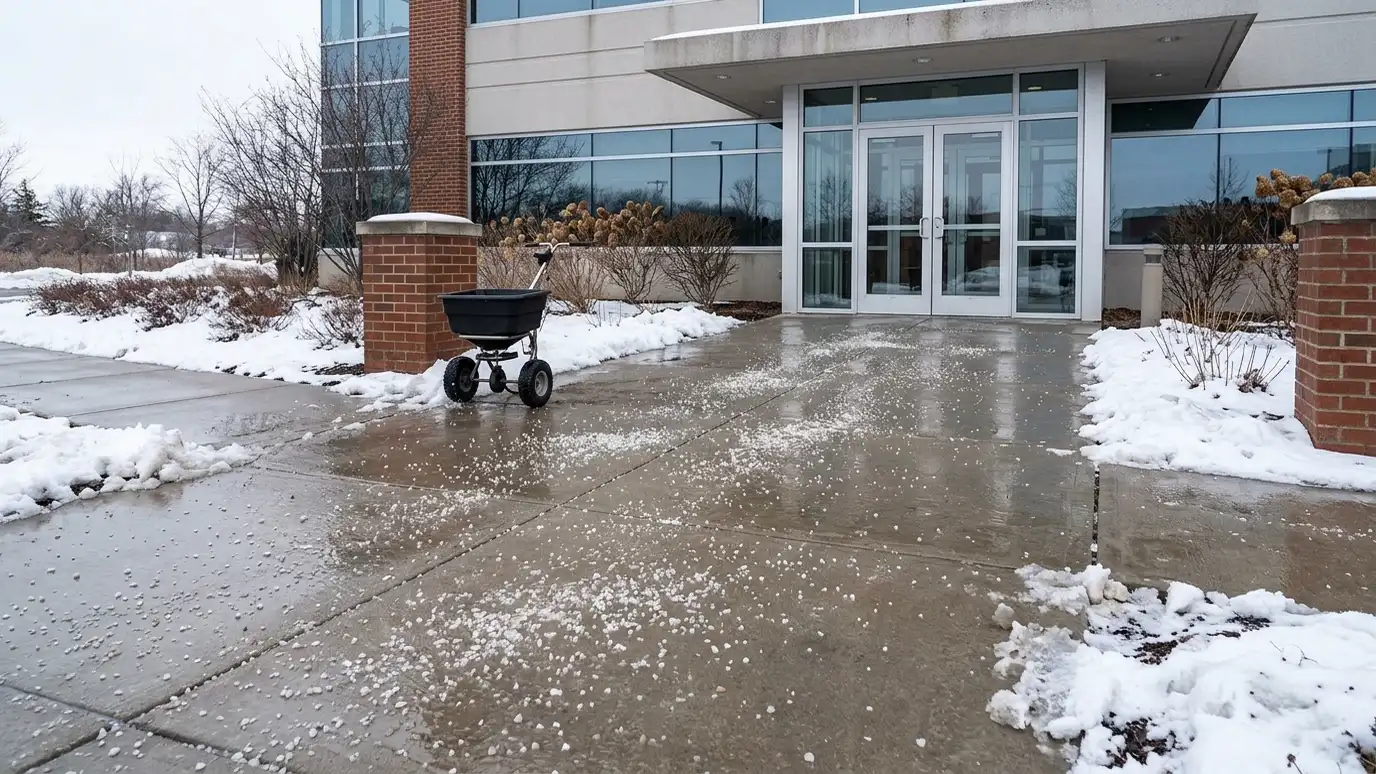
We choose products based on forecast temperature, surface type and nearby landscape. Pre-treating with brine before expected freezes gives the best protection with the least material. Rock salt blends handle general use, calcium chloride is held for extreme cold or speed and sand or traction products help where deicers are restricted. We apply with calibrated spreaders to prevent overuse, keep products away from beds and turf and sweep up excess so it does not wash into storm drains. Where concrete is new, we use gentler products or none, since fresh concrete is vulnerable to salt damage in its first year.
Best for
- Medical and school campuses
- Retail centers with ramps and walks
- Properties with new concrete
- Managers writing winter scopes
Strengths
- Brine lowers material use
- Calcium chloride works in deep cold
- Magnesium chloride is gentler on surfaces
- Pre-treatment makes clearing faster
Keep in mind
- Rock salt stops working at low temperatures
- Overuse harms concrete and plants
- Liquid applications need forecast timing
- Runoff can reach storm drains
What defines Snow and Ice Melt Products
Rock salt
Low cost, limited low-temp use.
Calcium chloride
Fast, works in deep cold.
Magnesium chloride
Gentler on surfaces and plants.
Brine
Pre-treat with less material.
Traction products
Where deicers are limited.
Measured use
Calibrated spreaders.
Snow and Ice Melt Products and the services that help.
Ready to explore your options?
Take the quiz, walk your property with a checklist or ballpark a budget.
 Which Commercial Landscaping Service Do I Need? QuizAnswer five questions about your property type, problems and goals to see which commercial landscaping services to start with.Try it
 Property Walk Checklist and Priority ScorerTick what you see on a walk of your property and get a priority list of what to fix first, from safety issues to quick wins.Try it
 Commercial Landscaping Budget PlannerPick a service, a size and a few add-ons and get a ballpark planning range for your property.Try it
Snow and Ice Melt Products FAQ
Is rock salt bad for concrete?
It can damage concrete, especially new concrete, if overused, so measured application matters.
When does brine help?
Applied before a freeze, it prevents ice from bonding and makes later clearing easier.
Can ice melt harm plants?
Yes, if piled near beds. We keep products off planted areas and choose gentler options where needed.
Keep exploring.
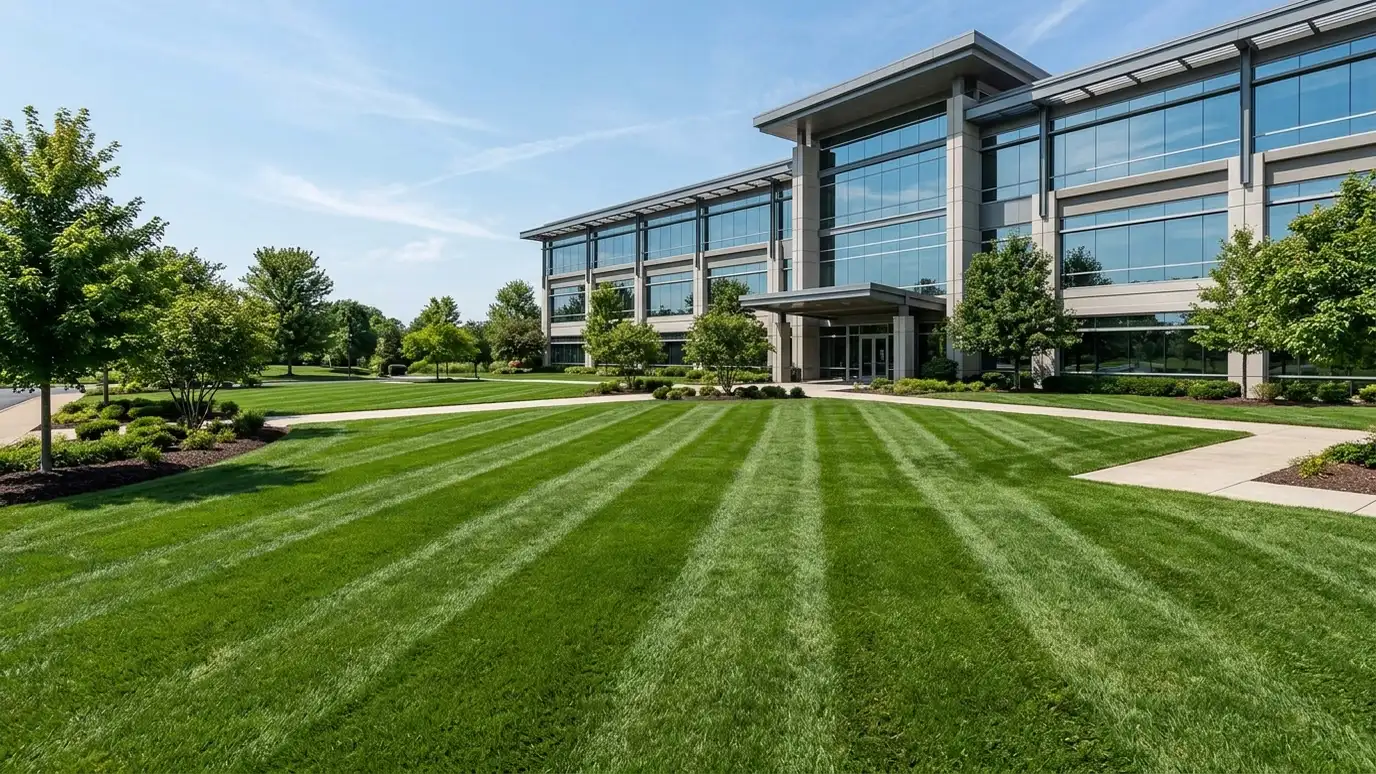 Topic guideCommercial Turf GrassPick the right grass for each commercial area. Compare tall fescue, bermuda and zoysia by sun, traffic, water…Learn more
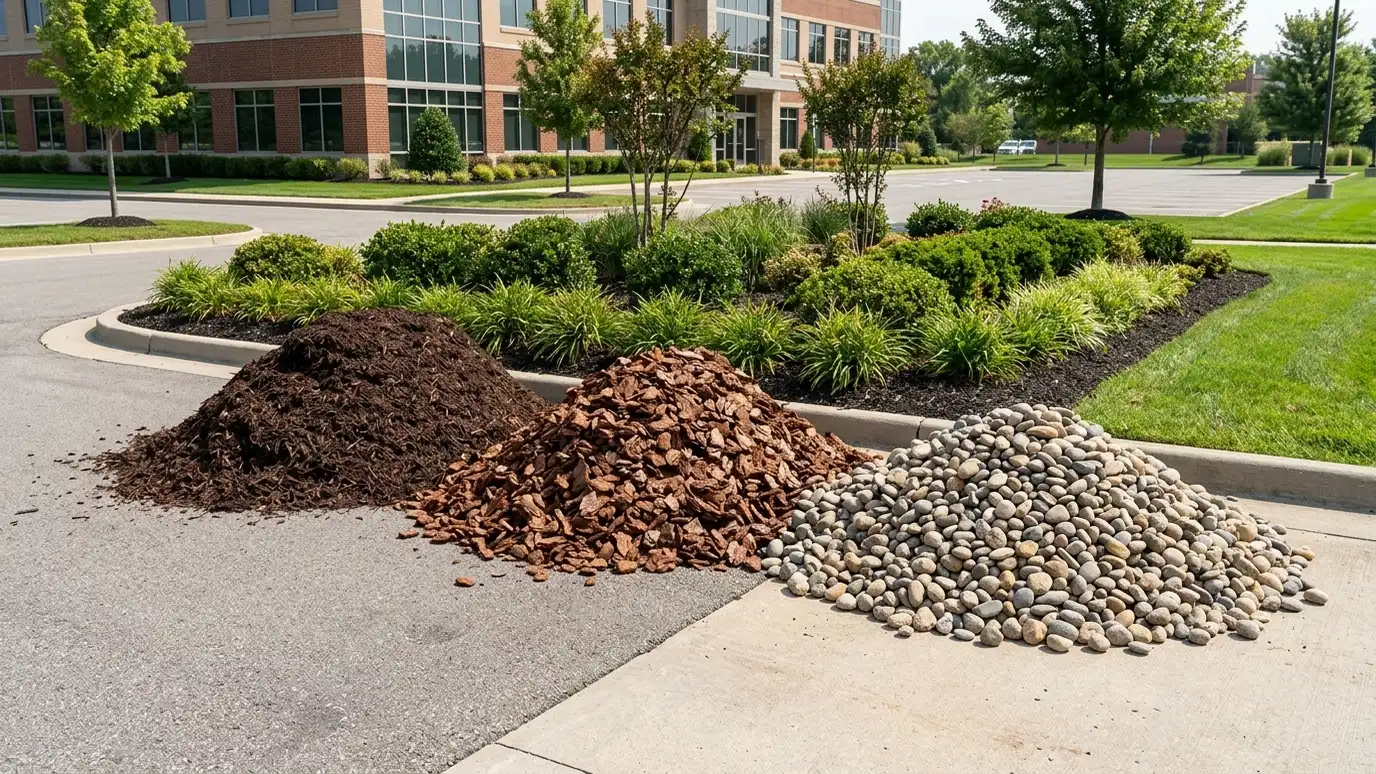 Topic guideMulch and Bed MaterialsHardwood, bark, pine straw or stone: compare mulch and bed materials for cost, look, weed control and maintenance…Learn more
 Topic guideTrees for Commercial SitesChoose trees that survive heat, salt, compaction and tight spaces. See which shade and ornamental trees work best…Learn more
 Topic guideNative PlantsNative plants cut watering and replacement while supporting pollinators. See which Middle Tennessee natives perform well in commercial…Learn more
Ready for grounds your board will be proud of?
Call us and we will walk your property and give you an itemized written proposal for maintenance, renovation or a one-time project.